Why Tyres Deserve More Attention Than They Get
For most young drivers, tyres fall into the category of "I'll deal with it when something goes wrong." That approach is expensive. Tyres are the only part of your car that touches the road, meaning their condition affects braking distance, cornering grip, fuel consumption, and long-term costs - all at once.
The good news: tyre maintenance doesn't require a mechanic or a big budget. A few consistent habits, done every few weeks, can add tens of thousands of miles to your set of tyres and reduce your fuel spend. For a broader picture of affordable upkeep, see our guide to car maintenance on a budget.
Core Tyre Maintenance Practices
The following habits are backed by tyre industry guidance and widely recommended by automotive safety organizations. None of them require specialist skills.
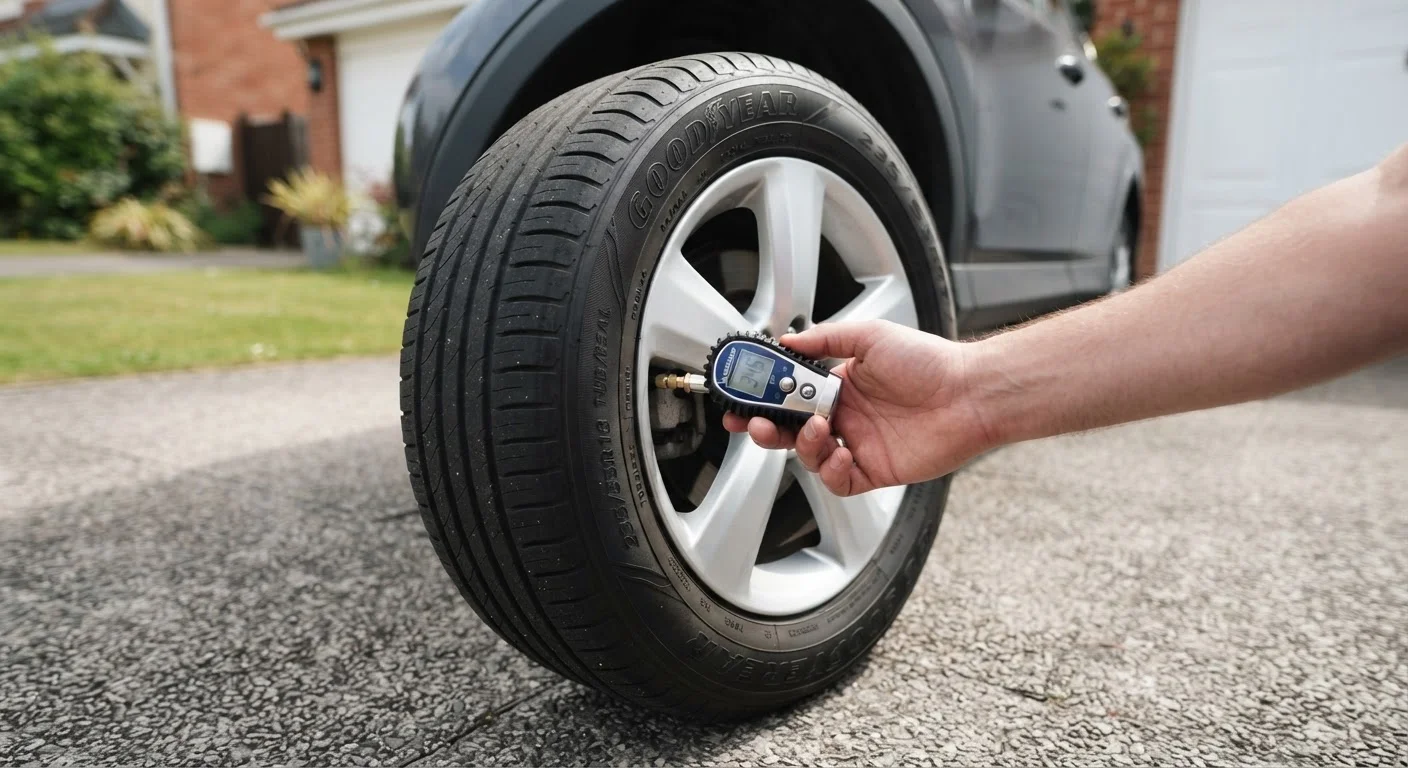
Check tyre pressure at least once a month and before long trips
Tyre pressure drops naturally over time - roughly 1 PSI per month in normal conditions, and more in cold weather. Consistently low pressure increases rolling resistance, accelerates tread wear on the tyre's outer edges, and reduces fuel efficiency. It also affects how the vehicle handles in an emergency stop.
Rotate your tyres every 5,000-7,500 miles
Front and rear tyres wear differently depending on whether the car is front-, rear-, or all-wheel drive, and on whether the front tyres are also handling steering. Rotating them on a regular schedule distributes that wear evenly across all four tyres, extending the full set's lifespan and avoiding a situation where two tyres wear out much faster than the others.
Test tread depth regularly using the quarter test
Worn tread dramatically increases stopping distances, particularly on wet roads. In the US, tyres are legally required to have at least 2/32" of tread remaining, but many safety organizations recommend replacing them at 4/32" or above, especially in wet or winter conditions. Catching low tread early also lets you budget for replacement rather than facing an emergency purchase.
Keep tyres balanced and have alignment checked annually
Wheel imbalance causes vibration, uneven tyre wear, and extra load on wheel bearings. Misalignment - where wheels aren't pointing in the correct direction - causes rapid and uneven tread wear that no amount of rotation can fix. Both issues are usually inexpensive to correct when caught early.
Inspect tyres visually for damage after unusual road events
Potholes, curb strikes, and road debris can cause internal structural damage that isn't immediately visible but weakens the tyre over time. Catching a bulge, crack, or embedded object early can prevent a blowout - a much more dangerous and costly outcome than a routine replacement.
Quick Actions You Can Start This Week
You don't need to overhaul your routine to protect your tyres. These immediate steps make a measurable difference from the first time you do them.
For the exact numbers you need - safe PSI ranges, tread depth limits, and rotation intervals - check out the tyre pressure and tread depth quick reference.
The Bigger Picture: Tyres, Fuel, and Total Cost
Tyre condition quietly affects your running costs in ways that aren't obvious until you start paying attention. Underinflated tyres create more rolling resistance, which means your engine burns more fuel to maintain speed. Worn or imbalanced tyres can also put extra stress on your suspension and braking system - costs that compound over time.
If your fuel bills seem higher than expected, tyre pressure is one of the first things worth checking. Our article on why your fuel bill is higher than it should be walks through the most common culprits in plain terms.
Pairing good tyre habits with brake-protective driving habits means fewer components wearing out prematurely - and that's where real savings accumulate over the life of your vehicle.
This article is for general informational purposes only. Always consult your vehicle owner's manual and a qualified mechanic for guidance specific to your car.