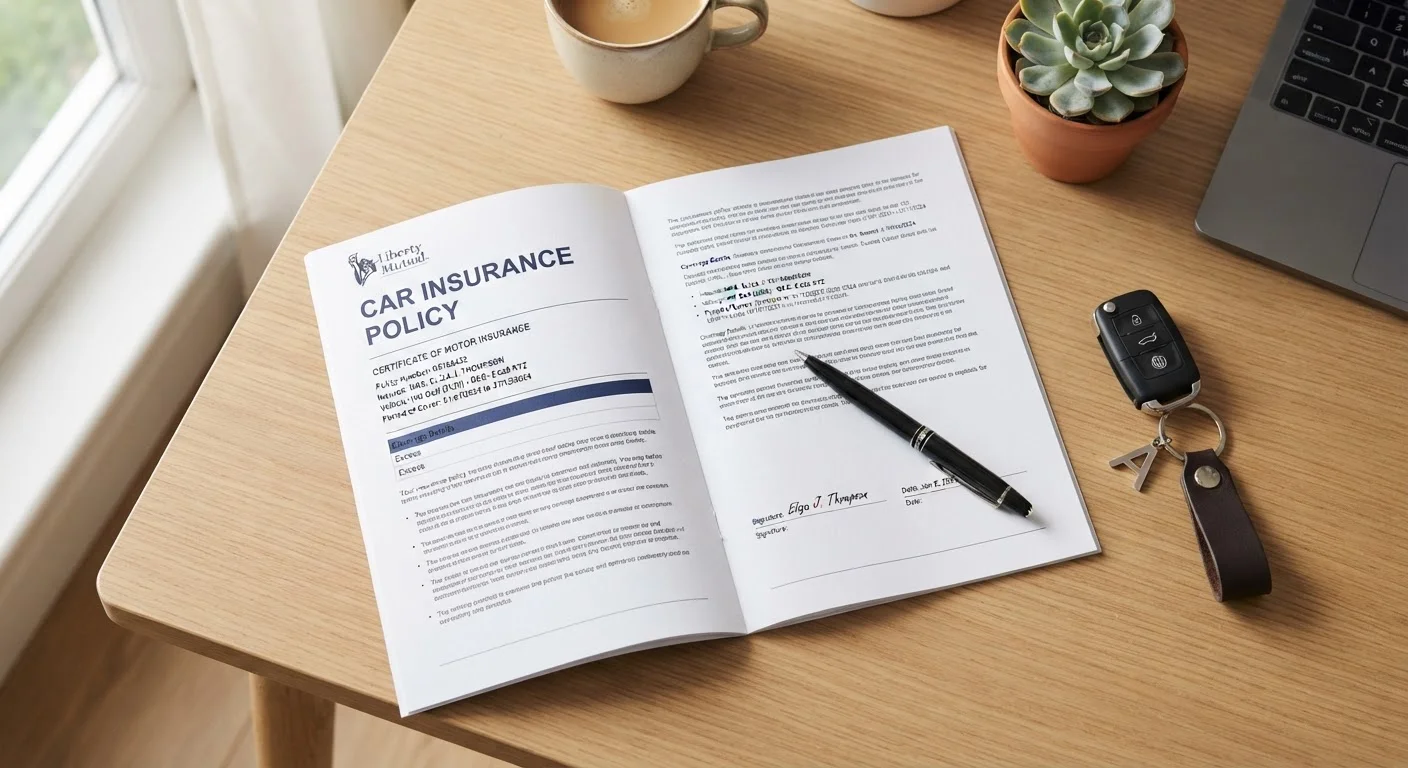
Why Your Policy Document Matters
Most drivers glance at their insurance certificate, confirm the car is covered, and file the paperwork away. That approach works fine - until it doesn't. When a claim arises, the fine print determines whether you're protected or out of pocket. Understanding your policy now, before anything goes wrong, is one of the smartest cost-saving moves you can make as a driver.
Insurance sits alongside fuel, servicing, and road tax as a recurring cost that adds up fast. For a full picture of where car ownership money goes, see our car ownership cost breakdown for new drivers. This guide focuses specifically on what each section of your policy actually says - and what it means for you.
Key Terms Decoded
Insurance policies use a consistent set of terms, and once you know them, the document becomes much easier to navigate.
Excess
The amount you agree to pay toward any claim before your insurer covers the rest. It has a compulsory part (set by the insurer) and an optional voluntary part you choose yourself.
Premium
The price you pay for your insurance policy, usually quoted annually or broken into monthly instalments.
No-claims bonus (NCB)
A discount on your premium that builds up for each year you don't make a claim. It can be lost - or protected for a fee - when a claim is made.
Exclusion
A specific situation or condition listed in your policy under which the insurer will not pay a claim.
Third-party cover
The minimum legal level of cover, which pays for damage or injury you cause to other people and their property - but not for damage to your own vehicle.
Policy schedule
The personalised page (or pages) of your policy that records your specific details: your name, vehicle, cover level, excess, and premium.
Underwriting
The process insurers use to assess the risk you represent and set the price of your policy accordingly.
Named driver
Any person, other than the main policyholder, who is listed on the policy as permitted to drive the insured vehicle.
These terms appear throughout both your schedule and your policy wording, so it's worth locking them in before reading further.
The Main Sections of a Policy
A standard car insurance policy is usually broken into four parts:
- Certificate of insurance - the legal proof that you're insured. It names the policyholder, the vehicle registration, the permitted drivers, and the period of cover. Carry a copy or know where the digital version lives.
- Policy schedule - your personalised summary. It lists your chosen cover level, add-ons (such as breakdown cover or legal expenses), your voluntary excess, and your premium.
- Policy wording - the full rulebook that applies to every customer on that product. It defines what is and isn't covered and under what conditions the insurer will pay.
- Statement of fact - a record of the information you provided when buying the policy. Errors here can void a claim, so check it carefully.
The distinction between comprehensive and third-party cover is covered in depth in our comprehensive vs third-party guide - it's worth reading alongside your schedule to confirm your cover level makes sense for your vehicle's value.
What to Check Before You Sign
Keep a Copy of Your Schedule Accessible
Store a digital copy of your policy schedule on your phone or in a secure cloud folder. If you're ever in an accident, you'll want your insurer's claims number, your policy reference, and your excess amount to hand immediately - not buried in email from months ago.
Before agreeing to any policy, run through this checklist:
- Named drivers - are all regular drivers listed? Unlisted drivers may not be covered, and adding a driver after the fact can change your premium.
- Annual mileage - does the figure match your actual use? Underestimating mileage is a common source of claim disputes.
- Excess total - add your compulsory and voluntary excess together. That combined figure is what you'd pay on a claim, so make sure it's affordable.
- Add-on cover - breakdown assistance, courtesy car, key cover, and legal expenses protection are often extras. Confirm what's included versus what costs more.
- No-claims bonus protection - if you've built up several claim-free years, check whether protection is available and whether it's worth the cost.
Your postcode, job title, and stated mileage all influence how much you pay. Our article on factors that inflate your premium explains the rating factors insurers use and where there may be room to reduce costs legitimately.
When Something Isn't Covered
Every policy has exclusions - circumstances in which the insurer won't pay. Common ones include:
- Driving under the influence of alcohol or drugs
- Using the vehicle for business purposes when only social, domestic, and pleasure use is declared
- Wear and tear or mechanical breakdown (insurance covers accidents, not maintenance)
- Leaving the car unlocked or keys in the ignition
- Damage caused while the vehicle is in an unroadworthy condition
Exclusions aren't hidden - they appear in the policy wording, usually in a clearly headed section. Skimming that section once when you first receive your documents takes less than ten minutes and can prevent a claim being denied when you least expect it.
For costs that catch new drivers off guard in general, our hidden costs guide covers the broader picture beyond insurance.
This article provides general information about car insurance policy documents and is not personalised financial or legal advice. Policy terms vary between insurers and products. Always read your own policy documents carefully and consult a qualified professional if you have questions about your specific cover.