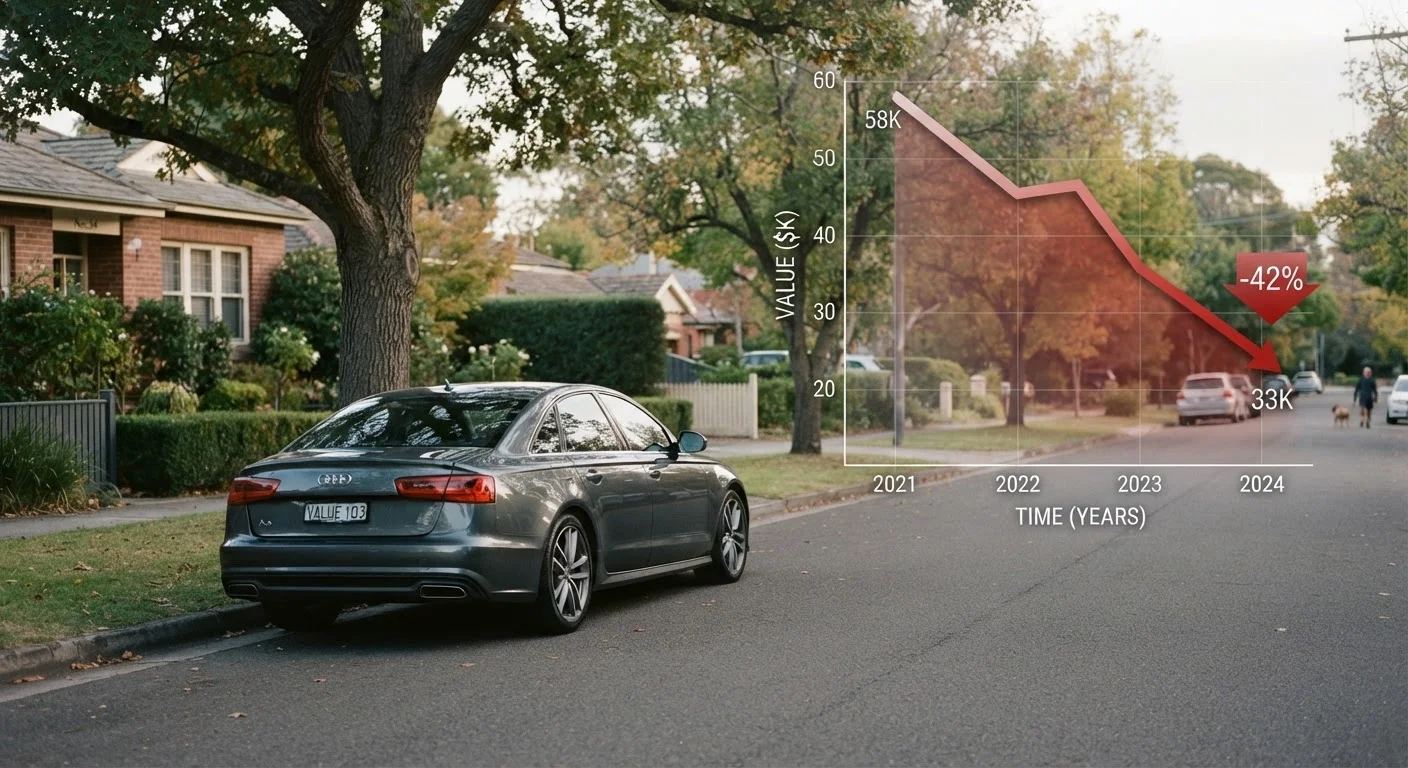
Why Depreciation Is the Hidden Cost of Car Ownership
When people calculate the cost of owning a car, they tend to focus on fuel, insurance, and maintenance. Depreciation rarely shows up as a line item - but it's often the biggest cost of all. Unlike a repair bill, you don't pay depreciation at the counter. Instead, it quietly erodes the asset value of your vehicle every month you own it.
For young drivers especially - many buying their first vehicle on a tight budget - understanding depreciation can shape every major ownership decision, from what to buy to how long to keep it. It's a core part of the full picture of car ownership costs that's easy to overlook until it hits at trade-in time.
~20%
Average value lost in year one
Industry estimates commonly put first-year depreciation for new vehicles between 15% and 25%, depending on make and model.
~50%
Value remaining after five years
Many vehicles retain roughly half their original purchase price after five years, though this varies considerably by vehicle type and market conditions.
#1
Depreciation as a cost of ownership
Studies from automotive research organizations consistently rank depreciation as the largest single expense in total vehicle cost of ownership calculations.
How Depreciation Actually Works
Depreciation isn't a flat, even decline. It follows a curve - steep at first, then gradually leveling off. Here's what that typically looks like:
- Year 1: New cars commonly shed 15-25% of their value. Much of this happens the moment the car is registered and driven, because it transitions from "new" to "used" in the resale market.
- Years 2-3: Depreciation continues at a fast clip, often another 10-15% per year.
- Years 4-5: The rate slows considerably. The car has already lost much of its total depreciation potential.
- Beyond year 5: Most vehicles settle into a slower, more predictable decline - though condition and mileage become increasingly important factors.
This curve explains why a one- or two-year-old used car can represent a different kind of value compared to a brand-new purchase. The original buyer absorbs the steepest drop; the second owner inherits a more stable asset.
What Speeds Up - or Slows Down - Depreciation
Several variables influence how quickly any particular car loses value:
- Mileage
- Higher mileage signals more wear, which buyers price accordingly. Keeping annual mileage in a typical range helps preserve value.
- Condition
- Dents, stains, worn interiors, and paint damage all reduce resale appeal. A clean, well-kept car commands a higher price on the used market.
- Service history
- Documented maintenance - oil changes, tire rotations, scheduled services - reassures buyers that the car has been looked after. See our guide to car maintenance on a budget for which tasks matter most.
- Accident history
- A reported collision, even a minor one, can significantly reduce what buyers are willing to pay.
- Make, model, and market demand
- Some vehicles hold value better than others due to reputation for reliability, popularity in the used market, or low running costs. Trucks and compact SUVs have historically depreciated more slowly than large sedans in the U.S. market, though this varies over time.
How to Use Depreciation Knowledge to Your Advantage
Understanding depreciation puts you in a stronger position at every stage of ownership.
When buying: A vehicle that is two to four years old has already absorbed much of its lifetime depreciation. You're effectively paying for a car that retains value more predictably going forward. This is one of the core trade-offs explored in our article on the financial trade-offs of owning an older car.
When selling or trading in: Timing matters. Selling privately before major depreciation milestones - or before high mileage thresholds - can improve your return. Knowing your car's approximate market value helps you avoid leaving money on the table.
When insuring: Because many policies pay actual cash value (the depreciated worth), it's worth understanding what your car is worth at any given point. This can affect whether add-ons like gap insurance make financial sense for your situation - though specific insurance decisions should be evaluated with a licensed professional.
Depreciation doesn't have to be a surprise. Factor it in from the start, alongside the other hidden costs that catch new drivers off guard, and you'll make ownership decisions with a clearer view of the real numbers.