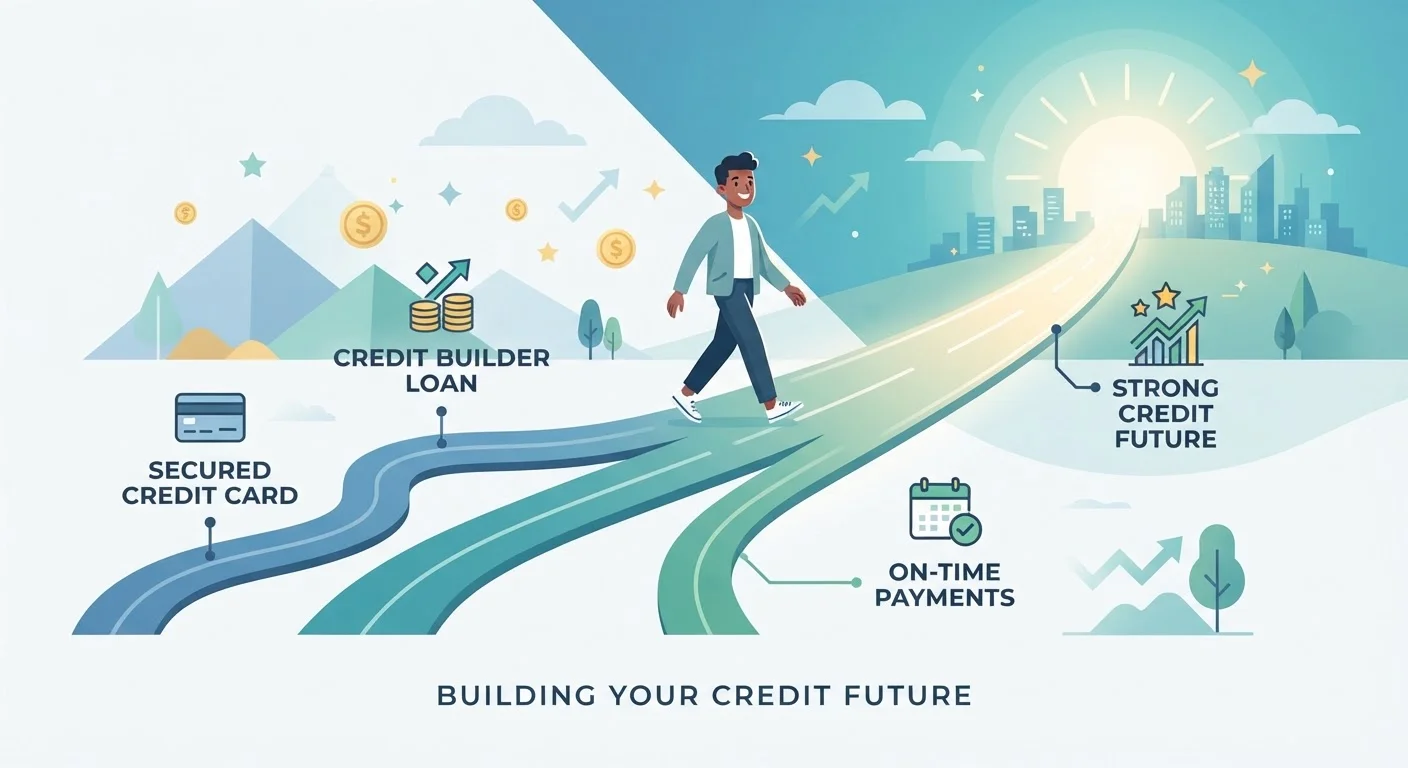
Why Your First Credit Move Matters
Starting a credit history is a bit like applying for a job that requires experience you don't yet have. Lenders want to see a track record before extending credit, but you can't build a track record without someone giving you a chance. Three widely available tools help break that impasse: secured credit cards, credit-builder loans, and authorised user status.
Understanding how each one works - and where each one falls short - puts you in a better position to choose the path that fits your circumstances rather than defaulting to whatever is easiest to sign up for. For a broader look at where this fits in the bigger picture, see our practical walkthrough for building credit from zero.
How Each Option Works
Secured credit cards require you to deposit cash upfront - often between $200 and $500 - which typically becomes your credit limit. You then use the card for everyday purchases and pay the bill monthly. The issuer reports your payment behaviour to one or more of the three major credit bureaus (Equifax, Experian, and TransUnion), which is how you build a file. After several months of responsible use, many issuers will upgrade you to an unsecured card and return the deposit.
Credit-builder loans work in reverse from a typical loan. The lender holds the loan amount in a savings account while you make fixed monthly payments over a set term - commonly 12 to 24 months. Once the loan is paid off, you receive the funds. The payment history, reported to the bureaus throughout, is the credit-building mechanism. The savings component is a secondary benefit rather than the primary purpose.
Authorised user status means a creditworthy individual - usually a parent, sibling, or close friend - adds you to an existing credit card account. You receive a card but often don't need to use it for the account's history to appear on your credit report. The primary cardholder's positive payment history and credit limit can give your thin file a meaningful boost, though the effect varies by credit scoring model and bureau.
| Secured Card | Credit-Builder Loan | Authorised User | |
|---|---|---|---|
| Upfront cash needed | Yes - security deposit required | No - payments made over time | None typically required |
| Who controls the account | You | You | Primary cardholder |
| Type of credit established | Revolving credit | Installment credit | Revolving credit (reflected) |
| Ongoing cost | Annual fee + interest if balance carried | Interest on loan payments | Minimal or none to you |
| Risk if you miss a payment | Score damage, late fee | Score damage, loan default | Score damage to primary holder |
| Typical time to see results | 3-6 months of reporting | Reports from first payment | Can appear within one billing cycle |
Costs and Practical Considerations
Each approach carries real costs worth examining honestly.
Secured cards typically involve an annual fee and may carry higher interest rates than standard cards. Carrying a balance - paying only the minimum - triggers interest charges that can outweigh the credit-building benefit. The goal is to pay in full each month. Keeping your balance well below your credit limit also matters for your credit utilisation ratio; you can learn more about why in our article on credit utilisation and how it affects your score.
Credit-builder loans charge interest on each payment, so you receive slightly less than you paid in over the loan term. The spread is the cost of building history. You also don't have access to the funds during the loan period, so this approach requires stable cash flow to avoid missed payments - which would damage rather than build your file.
Authorised user status has the lowest out-of-pocket cost but introduces relationship risk. If the primary cardholder misses payments, carries a high balance, or closes the account, those changes will affect your credit report too. This option depends entirely on trust in both directions.
Pair Credit Building With a Simple Budget
Before committing to any credit-building tool, map out your monthly income and fixed expenses. A secured card or credit-builder loan only helps your score if payments are made consistently and on time - a tight or unpredictable cash flow makes that harder. Even a basic monthly spending plan can reveal whether you have enough breathing room to take on a new financial commitment without risk of a missed payment setting you back.
Applying Strategically and Avoiding Common Mistakes
A few principles hold across all three options. First, on-time payment behaviour is the dominant factor in most credit scores. Missing a single payment can set back months of progress regardless of which product you use. Setting up automatic payments for at least the minimum due is a low-effort safeguard.
Second, be aware that applying for new credit - including secured cards - typically generates a hard inquiry on your report, which can cause a small, temporary dip in your score. Our article on hard vs. soft inquiries explains how to shop for credit while limiting unnecessary score impact.
Third, combining options - say, a secured card plus authorised user status - can accelerate results, but only if you have the organisational discipline to manage both without missing payments or overextending your budget. Our budgeting basics hub can help you assess what you can realistically take on each month.
Finally, once you have an established file, the habits that protect your score shift slightly. Long-term credit management principles are worth reviewing as your profile matures.
This article is for general informational and educational purposes only and does not constitute personalised financial advice. Please consult a qualified financial professional regarding decisions specific to your circumstances.