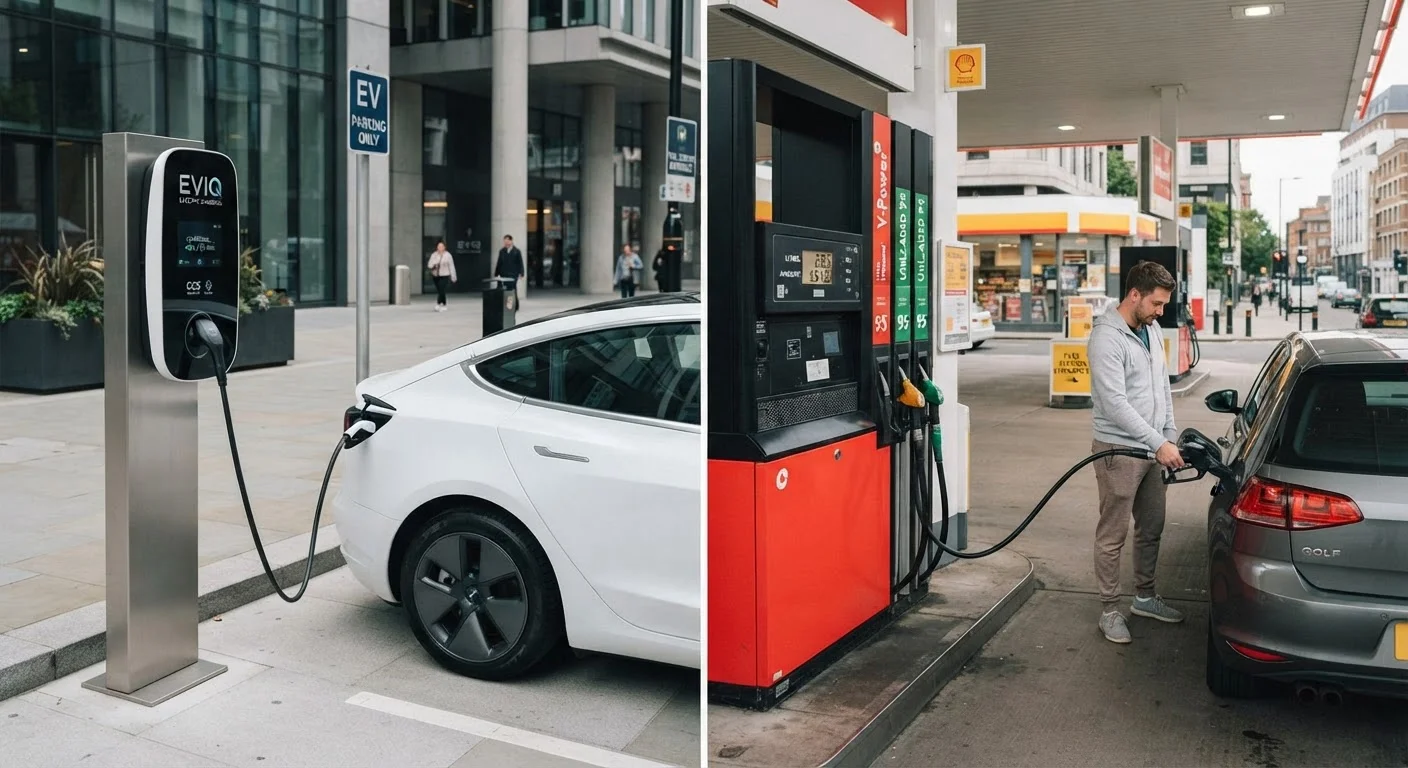
Fuel and Charging Costs: What You Actually Pay Per Mile
The most visible running cost is what you spend to move the car. For petrol drivers, that means pump prices - which fluctuate with global oil markets and can vary by 10-15 cents per gallon between stations. For EV drivers, it's electricity, which is generally more stable but not uniform.
Home charging overnight on a standard residential rate is typically the cheapest way to power an EV. Public Level 2 chargers cost more per kilowatt-hour, and DC fast chargers - convenient for long trips - can approach or sometimes exceed petrol cost-per-mile depending on pricing structures and your vehicle's efficiency. If you rely primarily on public rapid charging, the fuel-cost advantage of an EV narrows considerably.
For context, a petrol car averaging 30 mpg costs roughly $0.13-$0.17 per mile at $4.00/gallon. An efficient EV charging at home at $0.14/kWh and using 3.5 miles per kWh works out to around $0.04 per mile. Those are illustrative figures - actual costs depend on your vehicle, your local rates, and your driving style. See our guide to why fuel bills run higher than expected for habits that affect real-world efficiency in petrol cars.
Servicing and Maintenance: Where EVs Gain Ground
Electric motors have far fewer moving parts than internal combustion engines. There's no oil to change, no timing belt, no exhaust system, and no spark plugs. This translates to fewer scheduled service items and, over time, lower maintenance bills for most EV owners.
That said, EVs are not maintenance-free. Tyres wear similarly to petrol vehicles - and some heavier EVs may wear tyres faster due to added weight. Brake fluid still needs periodic replacement. Cabin air filters apply to both. Battery health checks become relevant as vehicles age.
Petrol cars require oil changes every 5,000-10,000 miles depending on the vehicle and oil type, plus periodic replacement of filters, belts, and other wear items. Over 100,000 miles, these costs accumulate. Consult the car maintenance hub for a practical overview of what routine upkeep involves for both vehicle types.
Check Your Home Charging Setup Early
A Level 1 charger (standard 120V outlet) adds roughly 4-5 miles of range per hour - slow for daily use. A Level 2 charger (240V, professionally installed) adds 20-30 miles per hour and is far more practical. Factor installation cost into your EV ownership budget if you don't already have one. Always use a qualified electrician for any electrical installation work.
Depreciation: The Cost Most Drivers Overlook
Depreciation - the loss of a vehicle's value over time - is often the single largest component of car ownership cost, yet it rarely appears on a monthly budget. For petrol cars, depreciation rates are relatively predictable based on mileage, age, and condition.
EV depreciation is less settled. Some older EV models have depreciated faster than petrol equivalents, partly due to rapid technology improvements making earlier battery ranges look modest by comparison. Newer EVs with larger battery packs have held value better in many cases, but this varies by model and market.
Battery replacement cost is a related concern. Most manufacturers offer battery warranties of 8 years or 100,000 miles, which provides some protection - but replacement costs outside warranty can be significant. When evaluating a used EV, checking battery health reports is advisable.
For a full picture of how depreciation fits into total ownership cost, the comprehensive car ownership cost breakdown is a useful starting point.
How to Compare the Two for Your Situation
No single answer fits every driver. The comparison shifts based on annual mileage, access to home charging, local electricity and petrol prices, insurance costs (which can differ between EV and petrol equivalents), and how you acquire the vehicle - loan, lease, or outright purchase. Leasing vs. buying introduces another layer of cost variability worth understanding before committing.
| Cost Category | Electric Vehicle | Petrol Vehicle | |
|---|---|---|---|
| Fuel/Charging (home) | ~$0.04-$0.06/mile | ~$0.13-$0.17/mile | |
| Fuel/Charging (public fast) | Variable, can match petrol | Consistent pump pricing | |
| Routine servicing | Lower - no oil changes, fewer parts | Higher - oil, filters, belts | |
| Tyre costs | Similar; heavier models may wear faster | Standard wear patterns | |
| Depreciation | Less predictable; battery age matters | More predictable by mileage/age | |
| Upfront purchase cost | Generally higher in same segment | Generally lower in same segment |
Understanding common misconceptions also matters. Petrol drivers sometimes assume small changes like premium fuel or idling adjustments save meaningful money - many don't. Our fuel economy myths explainer separates fact from fiction. The goal for any driver should be reducing total cost of ownership, not just one line item in isolation.