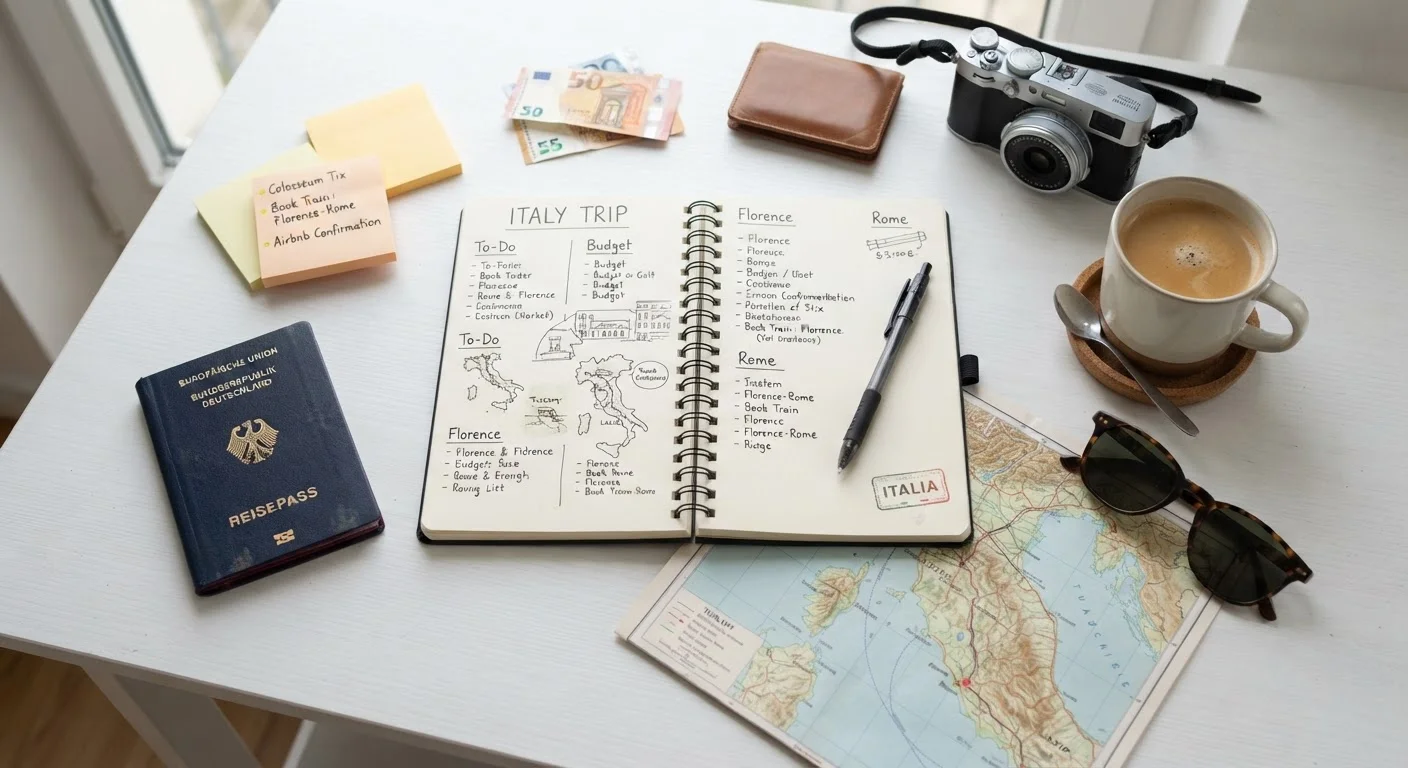
Stage 1: Inspiration and Scoping
Every trip starts as an idea, but the planning process begins the moment you ask a concrete question: Where, when, and for how long? These three parameters define everything downstream. Before you open a booking site, answer them with rough numbers.
Destination scoping means narrowing from a vague region to a specific country or city - ideally one that fits your budget and available travel days. If you're drawn to Southeast Asia but have ten days and limited funds, that narrows your shortlist considerably. Checking budget destination options at this stage helps anchor expectations to real costs rather than aspirational ones.
The output of this stage should be: a destination (or two backup options), a travel window of two to four weeks, and a rough total budget ceiling. Write these down. Vague intentions lead to delayed decisions, which leads to higher prices.
Stage 2: Research and Budget-Setting
Research is where most planning errors originate - not because people skip it, but because they research the wrong things. The priority order matters: entry requirements and visa timelines first, then flight cost ranges, then accommodation types and daily cost of living at the destination.
68%
Travellers who exceeded their trip budget
According to a survey by NerdWallet, roughly 68% of Americans who took a vacation reported spending more than they planned, with poor pre-trip budgeting cited as a leading factor.
3-6 months
Optimal advance booking window for international flights
Research from travel fare analysts generally indicates that booking international flights three to six months ahead tends to produce mid-range fares, though this varies by route and season.
15-20%
Recommended trip budget contingency buffer
Travel financial planners commonly recommend adding 15-20% to estimated trip costs to cover delays, medical needs, currency fluctuation, or unplanned expenses.
Set a realistic daily budget by looking at what accommodation, food, local transport, and one paid activity per day will actually cost. Add 15-20% as a contingency buffer - not for luxury, but for delays, medical needs, or itinerary changes. Once you have a daily number, multiply by trip length and add estimated flight costs to get a working total.
If you're planning to visit multiple countries, the complexity increases. Our guide on planning a multi-destination trip covers how to approach routing and budget sequencing across borders.
Stage 3: Booking - Order and Timing Matter
Booking is not a single event - it's a sequence. The order you book in affects both cost and flexibility. A structured approach:
- Flights first. Once you've confirmed your travel window and destination, flights lock in your dates. Booking too early (more than six months out) or too late (under three weeks) often means paying more.
- Accommodation second. With exact dates confirmed, book key nights - especially in high-demand destinations or during local festivals. Mid-trip nights in flexible destinations can often wait.
- Activities and experiences last. Many paid experiences don't require advance booking, but popular ones - guided tours, national park permits, cooking classes - often sell out. Identify the two or three must-do activities and confirm their booking requirements during the research stage.
Before committing to any booking, run through the essentials in a pre-trip checklist. Our pre-trip planning checklist covers visas, entry requirements, and insurance - the items that can derail a trip if left until last minute.
Stage 4: Pre-Departure Preparation
This stage runs from booking confirmation to the day you leave. It's the most underestimated phase - and the one where logistical failures most often occur.
Key tasks include: applying for visas if required (timelines vary significantly by nationality and destination - always verify with official government sources), notifying your bank of travel dates, downloading offline maps, and confirming accommodation details. If you're travelling with others, this is also where shared responsibilities get divided. The dynamics of group planning are meaningfully different from solo planning - how the planning process differs for groups vs. solo travellers is worth reviewing if you're coordinating with others.
Packing, while practical, should be guided by your itinerary's climate range and activity mix - not by anxiety. A packing list built around your specific trip is more useful than a generic one.
Stage 5: On-the-Road Budget Management
The final stage is the trip itself - and the planning mindset doesn't stop at departure. The most effective travellers track spending daily against their pre-set budget, making small adjustments rather than discovering an overspend at the end. A simple notes app or travel budget tracker is enough for most people.
Spending control on the road is largely about food, local transport, and unplanned purchases. Eating where locals eat, using public transit where safe and practical, and distinguishing between genuine experiences and tourist-tax spending keeps costs in check without reducing quality. For more tactics, on-the-road savings strategies covers these in detail.
Build in at least one unscheduled half-day per four days of travel. Rigid itineraries that account for every hour are the most common source of trip stress - and often the most expensive, since rushed travellers tend to pay more for convenience.
This article provides general travel planning information only. Entry requirements, visa rules, and travel advisories change frequently - always verify current conditions with your government's official travel authority and relevant embassies before booking or travelling.