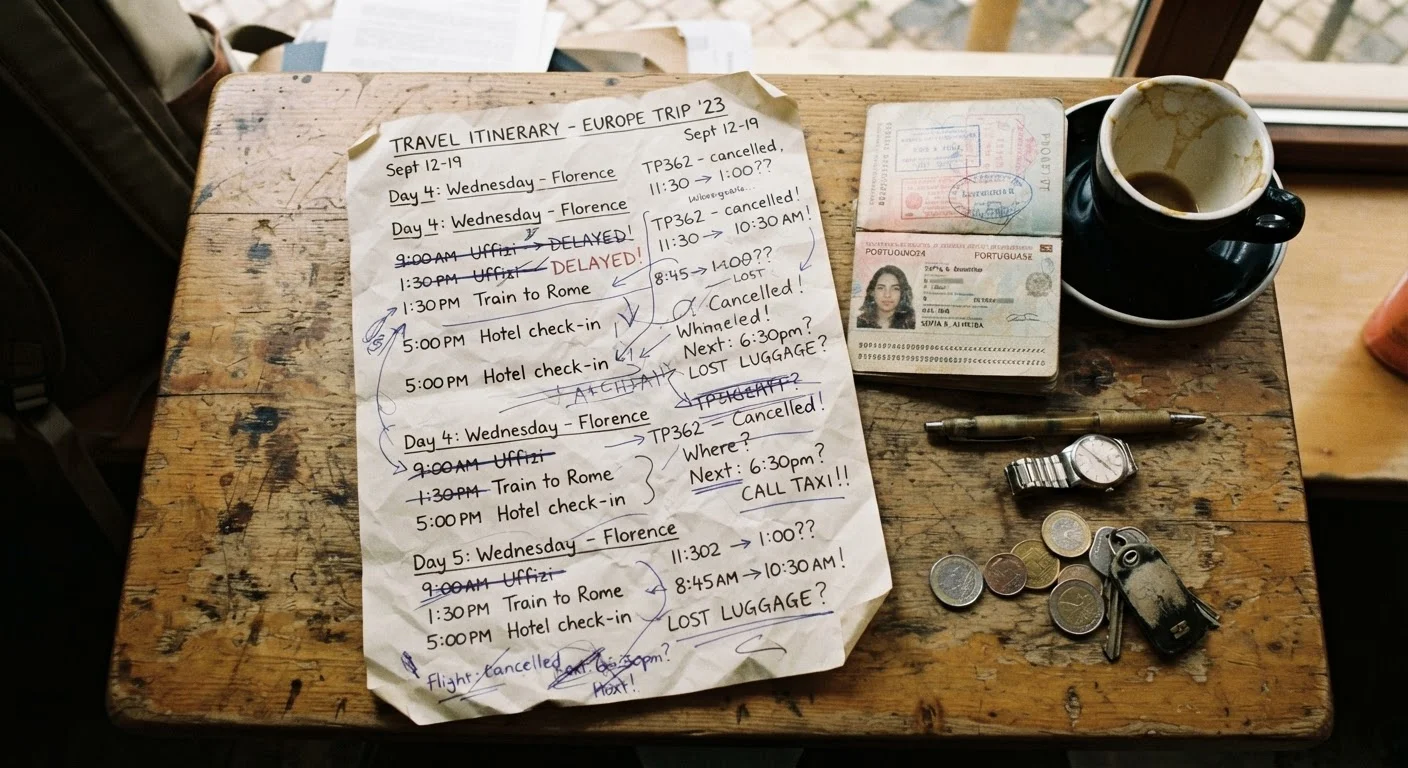
Why Itineraries Go Wrong Before You Even Leave
Most travel stress doesn't start at the airport - it starts at the planning stage. The mistake isn't caring too much about logistics; it's misunderstanding what a realistic day of travel actually looks like. When you plan on paper, everything looks tidy. In practice, check-ins take longer, transit connections have gaps, and attractions have queues that no itinerary accounts for.
Understanding where plans break down is the first step to building one that holds. See what thoughtful planning looks like at every stage for a fuller picture of the process. The mistakes below are the ones that reliably derail otherwise well-intentioned trips.
Packing too many activities into a single day, leaving no time for anything to run over schedule.
Why it happens: On paper, each activity seems short. Travellers add up individual durations without accounting for travel between them, wait times, or the simple reality of needing to eat.
Underestimating how long transit actually takes between destinations or attractions.
Why it happens: Mapping apps show travel time under ideal conditions. They don't factor in unfamiliar transit systems, luggage, language barriers, or peak-hour congestion.
Booking no rest days on trips longer than five or six nights.
Why it happens: Rest days feel like wasted travel time, especially on short trips. The instinct is to fill every available hour - particularly when flights were expensive.
Not checking opening hours, reservation requirements, or local closure days before locking in a plan.
Why it happens: Travellers research what to see but not when things are accessible. Many museums close one day per week; popular sites require advance booking months ahead.
Committing to rigid, back-to-back bookings across an entire trip with no flexibility to adapt.
Why it happens: Booking everything in advance feels organised and can sometimes secure lower prices. It also provides a sense of security about a trip that is still months away.
The Ripple Effect on Your Budget
Itinerary mistakes don't just cost time - they cost money. A missed train means buying a replacement ticket at a premium. An over-scheduled day that runs long might mean paying for a taxi instead of walking or using transit. Skipping a rest day and burning out mid-trip can lead to impulsive hotel upgrades or expensive comfort spending just to recover.
42%
Travellers who report feeling rushed on their last trip
A 2023 survey by the American Society of Travel Advisors found roughly four in ten leisure travellers described their most recent trip as feeling overscheduled or hurried.
1 in 3
Trips affected by at least one unplanned extra cost
Data from travel insurance claims consistently shows that itinerary disruptions - missed connections, booking changes - are among the leading causes of unplanned trip expenses.
Budget travellers especially feel this pressure. When margins are tight, a single planning error can cascade into a string of unplanned costs. Common overspending patterns often trace back to exactly this kind of structural itinerary failure rather than individual splurges.
One practical safeguard: instead of booking every component in advance, identify which days have genuine flexibility and leave those loosely structured. This gives you room to act on what's actually working without being trapped by what looked good in a spreadsheet. For a broader framework, durable strategies for stretching a travel budget cover this approach in detail.
Date flexibility is another lever most travellers underuse. Shifting your window by even a day or two can open up meaningfully different options - both for cost and for pacing. Before committing to any booking, run through a pre-trip checklist to catch structural gaps early. Multi-destination trips carry their own added complexity - routing and sequencing decisions deserve their own dedicated review before anything is confirmed.
This article is for general informational purposes only. Travel conditions, prices, and requirements can change; always verify with official sources before booking.