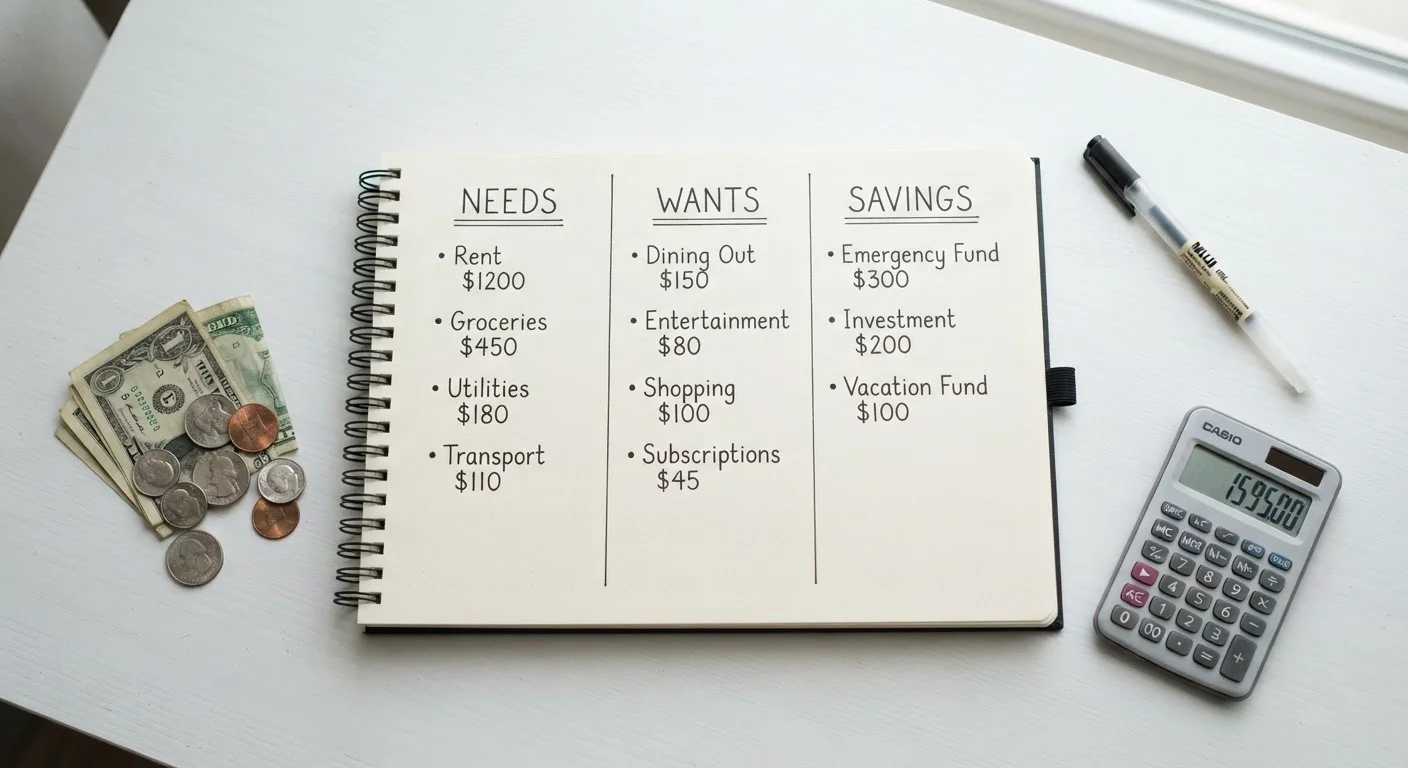
How the Three Buckets Actually Work
The appeal of the 50/30/20 rule is its simplicity: one number to remember for each category. But what counts as a "need" versus a "want" trips people up more than any math does.
Needs (50%)
Needs are expenses you cannot reasonably avoid - housing, utilities, groceries, minimum debt payments, health insurance, and basic transportation to get to work. The test is: Would my daily life or financial standing collapse if I skipped this payment? If yes, it's a need. A streaming subscription doesn't pass that test. Your electric bill does.
Wants (30%)
Wants are the discretionary spending that makes life enjoyable but isn't strictly required: restaurants, entertainment, gym memberships, travel, and upgrades beyond the basics (name-brand groceries instead of store-brand, for instance). This category is where most young adults find the most room to trim when money is tight.
Savings and Debt Repayment (20%)
The final bucket covers contributions to an emergency fund, retirement accounts, and any debt payments above required minimums. Prioritizing within this 20% matters: most personal finance educators suggest building a small emergency cushion first, then attacking high-interest debt, then investing for the long term. This article is general financial education - consult a licensed financial adviser before making decisions about your specific situation.
~35%
Average share of income spent on housing by U.S. renters
According to U.S. Census Bureau data, a significant portion of American renters spend more than 30% of income on housing alone, putting pressure on the 50% needs target.
$37,000+
Average federal student loan debt per borrower
Federal Student Aid data indicates average federal student debt per borrower regularly exceeds $37,000, creating a substantial fixed monthly obligation that affects how the 50% needs bucket fills up.
56%
Americans unable to cover a $1,000 emergency from savings
Bankrate surveys have consistently found that the majority of Americans cannot absorb an unexpected $1,000 expense, underscoring why the 20% savings category matters even at lower income levels.
Where the Rule Gets Complicated
The 50/30/20 rule was designed with a median American income in mind. Reality is messier.
High Housing Costs
In many U.S. cities, rent alone can consume 40-50% of a modest take-home salary before groceries or utilities are considered. If your needs genuinely exceed 50%, you have two realistic options: reduce a need (get a roommate, move to a less expensive area) or temporarily shift your percentages and accept that the 20% savings target won't be fully met right now.
Student Loan Debt
Large monthly loan payments inflate the needs category fast. Whether your minimum payment is $200 or $600 a month changes the math significantly. If you're navigating this, the full budgeting lifecycle guide walks through how to recalibrate when one category dominates your budget.
Low Starting Salaries
On a $32,000 net annual income (roughly $2,667/month), a 20% savings target equals about $533 per month. That's a meaningful sum when rent, food, and transportation already consume the majority of take-home pay. Saving any amount - even 5% - is still progress worth making.
Start With a Spending Audit, Not a Target
Before adjusting your habits to hit 50/30/20, spend one full month simply recording what you already spend - without changing anything. Knowing your real baseline (say, 68/27/5) gives the framework a concrete starting point and makes your targets feel achievable rather than arbitrary.
How to Apply It Starting This Month
Getting the rule to work in practice takes a few concrete steps rather than just knowing the percentages.
- Find your real take-home number. Check your most recent pay stub for the net pay figure. If income varies month to month, use a three-month average as your baseline.
- Audit one month of actual spending. Pull your bank and credit card statements and categorize every transaction as a need, want, or savings contribution. Most people discover their current split before they start any intentional budgeting.
- Compare your actual split to 50/30/20. The gap between where you are and where the rule suggests tells you exactly where to focus. A 70/25/5 split means needs are crowding out savings - the priority is finding ways to reduce fixed costs or increase income over time.
- Set up automatic transfers. Once you know your target savings dollar amount, automate a transfer to a separate savings account on payday. Automating removes the decision from your hands and makes saving the default rather than the afterthought.
If you haven't built a budget before, our plain-language first budget guide covers the foundational steps before you layer in any percentage framework.
For a side-by-side look at how this approach stacks up against other methods, see zero-based vs. envelope budgeting.
This article provides general financial information for educational purposes only and is not personalized financial advice. Please consult a qualified financial professional for guidance suited to your individual circumstances.