Why Irregular Expenses Break Budgets
Most budgets do a reasonable job of accounting for rent, utilities, and groceries - expenses that show up on roughly the same schedule every month. What tends to break budgets are the costs that arrive predictably but infrequently: the annual car registration in February, holiday gifts in December, a semi-annual insurance premium in March. These aren't surprises in the true sense - you know they're coming - but without a plan, they hit like one.
The result is a familiar cycle: the expense appears, there's no dedicated money for it, and the gap gets filled with a credit card charge or a raid on savings. If you want to understand how irregular costs fit into the bigger picture of your spending categories, the budgeting glossary is a helpful reference. Sinking funds exist precisely to close that gap before it opens.
How Sinking Funds Actually Work
The mechanics are straightforward. Identify an upcoming expense, estimate its total cost, determine when you'll need the money, and divide the total by the number of months between now and then. That monthly figure becomes a recurring budget line item - just like rent.
For example: you expect to spend $480 on holiday gifts. If you start planning in July, that's five months away. Contribute $96 per month and the money is fully funded before December arrives. The expense doesn't change; your relationship to it does.
Name Your Fund to Stay Motivated
Give each sinking fund a specific label - 'Holiday Gifts 2025' or 'Tire Fund' - rather than a generic 'savings' label. Research on goal-setting suggests that concrete, named goals are easier to stick to than vague ones. Even a simple spreadsheet column with a clear name reinforces the purpose of every contribution you make.
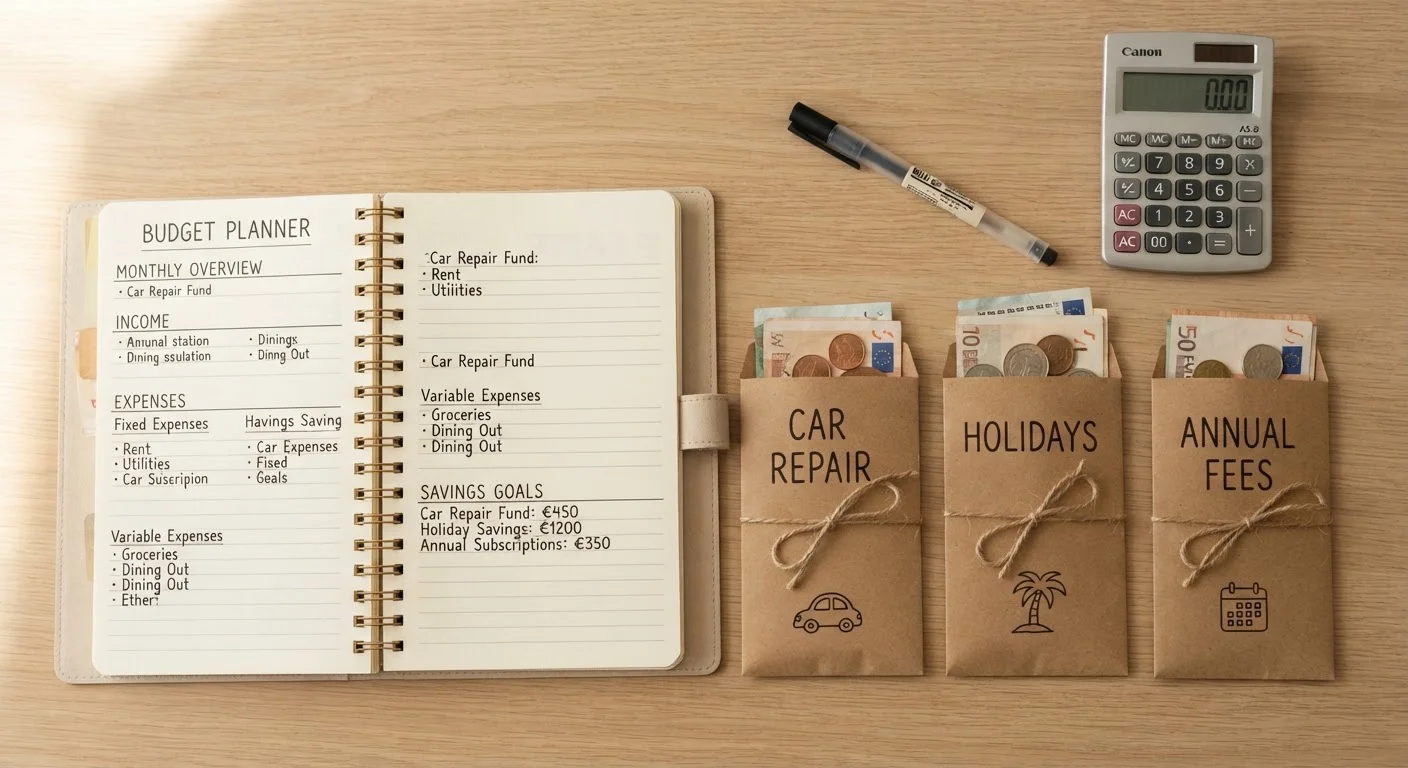
You can run multiple sinking funds simultaneously - one for car maintenance, one for travel, one for annual subscriptions. Each has its own contribution rate and target date. Track them in a spreadsheet or a budgeting app, or ask your bank about opening free sub-savings accounts. Before building these out, it helps to gather your financial baseline so your estimates are grounded in real numbers.
Sinking Funds vs. Emergency Funds: Know the Difference
People often conflate sinking funds with emergency funds, but they serve very different purposes. An emergency fund is your financial backstop for genuinely unforeseen events - a job loss, an unexpected medical bill, an urgent home repair you could not have reasonably anticipated. A sinking fund is for costs you've already identified and scheduled.
Using your emergency fund to cover a predictable car registration isn't a financial emergency - it's a planning gap. Over time, that habit erodes the emergency fund and leaves you exposed when a real crisis hits. The relationship between emergency funds and budgets is worth understanding clearly, and if you're still building your emergency fund while trying to start sinking funds, that's a common challenge with workable solutions covered in our guide on building an emergency fund on a tight budget.
~$1,500
Average unexpected car repair cost in the US
Industry estimates suggest a single unplanned mechanical repair can run $1,500 or more, making automotive sinking funds among the most impactful.
32%
Americans with no dedicated irregular expense savings
Surveys consistently find that a significant share of US adults have no set-aside funds for predictable but infrequent costs, leaving them reliant on credit.
Starting Your First Sinking Fund
Begin with the expense that causes you the most financial stress each year. For many people, that's car-related costs. If you spend roughly $600 annually on maintenance and repairs, contributing $50 a month to a dedicated car fund means the next oil change, tire rotation, or unexpected repair draws from a ready pool rather than a credit card. You can explore more strategies on the car maintenance hub to estimate realistic annual figures.
Once you've established one fund, adding others becomes intuitive. A useful exercise is to scroll back through last year's bank statements and flag every expense that was irregular but foreseeable. Those are your sinking fund candidates. For students new to managing money, building a first budget from scratch covers how sinking funds fit into an entry-level financial plan. More general savings tactics are also available on the saving and frugal tips hub.
This article is for general informational and educational purposes only and does not constitute personalized financial advice. Consult a qualified financial professional for guidance specific to your circumstances.