Why Pet Food Labels Feel Confusing
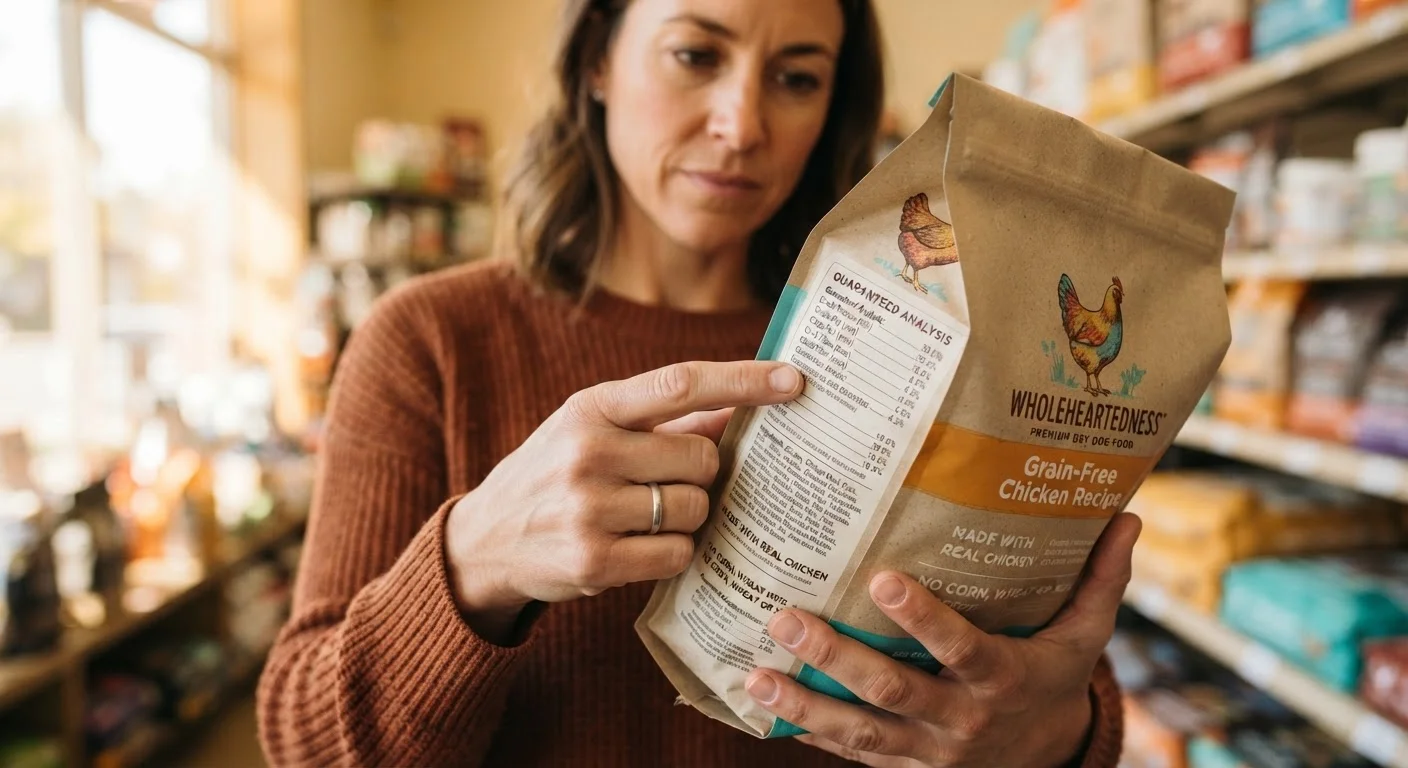
Flip a bag of pet food around and you're hit with a wall of text - percentages, Latin-sounding ingredients, official-sounding acronyms. It's a lot. But every piece of that label follows a regulated format, which means once you know the pattern, you can decode any bag or can quickly. This guide walks you through each section of a standard U.S. pet food label so nothing catches you off guard.
For context, pet food sold in the U.S. is regulated at the federal level by the Food and Drug Administration (FDA) and at the state level by guidelines based on standards set by the Association of American Feed Control Officials (AAFCO). These rules determine exactly what must appear on a label and how it must be worded.
Start with the AAFCO Statement
If you're short on time, the AAFCO nutritional adequacy statement is the single most important line on any pet food label. It tells you whether the food is complete and balanced for your pet's life stage - before you even look at the ingredient list. Make it your first stop, not your last.
The Six Core Sections of Every Label
U.S. pet food labels must include six required elements. Here's what each one actually means:
- Product name: More regulated than you'd think. If a food is called "Chicken for Dogs," chicken must make up at least 95% of the total ingredients (excluding water). The word "with" (as in "with Chicken") drops that threshold to just 3%. Names matter.
- Net weight: The total amount of food in the package - straightforward.
- Manufacturer information: The name and address of the manufacturer, packer, or distributor responsible for the product.
- Ingredient list: Ingredients are listed in descending order by weight before cooking. This is important: a raw meat ingredient is mostly water, so it may rank high on the list but contribute less protein per dry ounce than a concentrated meal (like "chicken meal") listed further down. Neither placement is automatically better or worse - understanding the context is key.
- Guaranteed analysis: Shows minimum percentages of crude protein and crude fat, and maximum percentages of crude fiber and moisture. These are guarantees, not exact values - actual nutrient content can vary. If you need to compare a wet food and a dry food, you'll need to convert both to a dry matter basis to make an apples-to-apples comparison.
- Nutritional adequacy statement: This is the most important line on the label (more on this below).
If you're also curious about how human nutrition labels work, the guide to human nutrition label literacy covers similar fundamentals from a different angle.
Decoding the AAFCO Statement
The AAFCO nutritional adequacy statement is the single most useful line on a pet food label. It tells you two things: whether a food is nutritionally complete and balanced, and which life stage it's formulated for.
There are two ways a manufacturer can make this claim:
- Formulated to meet AAFCO nutrient profiles: The recipe was calculated to contain nutrients at or above AAFCO's recommended levels, but it was not tested on live animals.
- Substantiated by feeding trials: The food was fed to animals in a controlled study following AAFCO protocols. This is a higher bar of evidence.
Life stage designations include "growth" (puppies/kittens), "maintenance" (healthy adults), "reproduction" (pregnant or nursing), "all life stages," and occasionally "senior" - though AAFCO does not currently set a separate senior nutrient profile, so that label is largely a marketing term.
If a bag says "for supplemental feeding only" or makes no adequacy statement at all, it is not intended as a sole diet. That's not inherently bad - some treats or toppers are designed that way - but it's critical to know.
Curious about one of today's most debated label claims? The truth about grain-free pet diets unpacks what the research actually shows beyond the marketing language.
Common Label Tricks to Watch For
Labels are regulated, but they still leave room for marketing creativity. Two patterns worth knowing:
Ingredient splitting: A manufacturer might list "ground corn," "corn gluten meal," and "corn bran" as separate entries. Each appears lower on the ingredient list than if they were combined - but corn is still a dominant ingredient overall. This isn't illegal, but it can be misleading if you're scanning only for the first few items.
"Natural" and "holistic": "Natural" has a specific (if loose) AAFCO definition - it generally excludes chemically synthesized ingredients, with some exceptions. "Holistic," however, has no regulatory definition whatsoever. It's a marketing word, nothing more.
For a broader look at weighing cost and nutrition together, the homemade vs. store-bought pet food comparison is a useful companion read. And for a full picture of what responsible care involves beyond food choices, see everything that goes into responsible pet ownership.
This article is for general informational purposes only and is not a substitute for personalized veterinary advice. Always consult a licensed veterinarian about your specific pet's dietary needs.