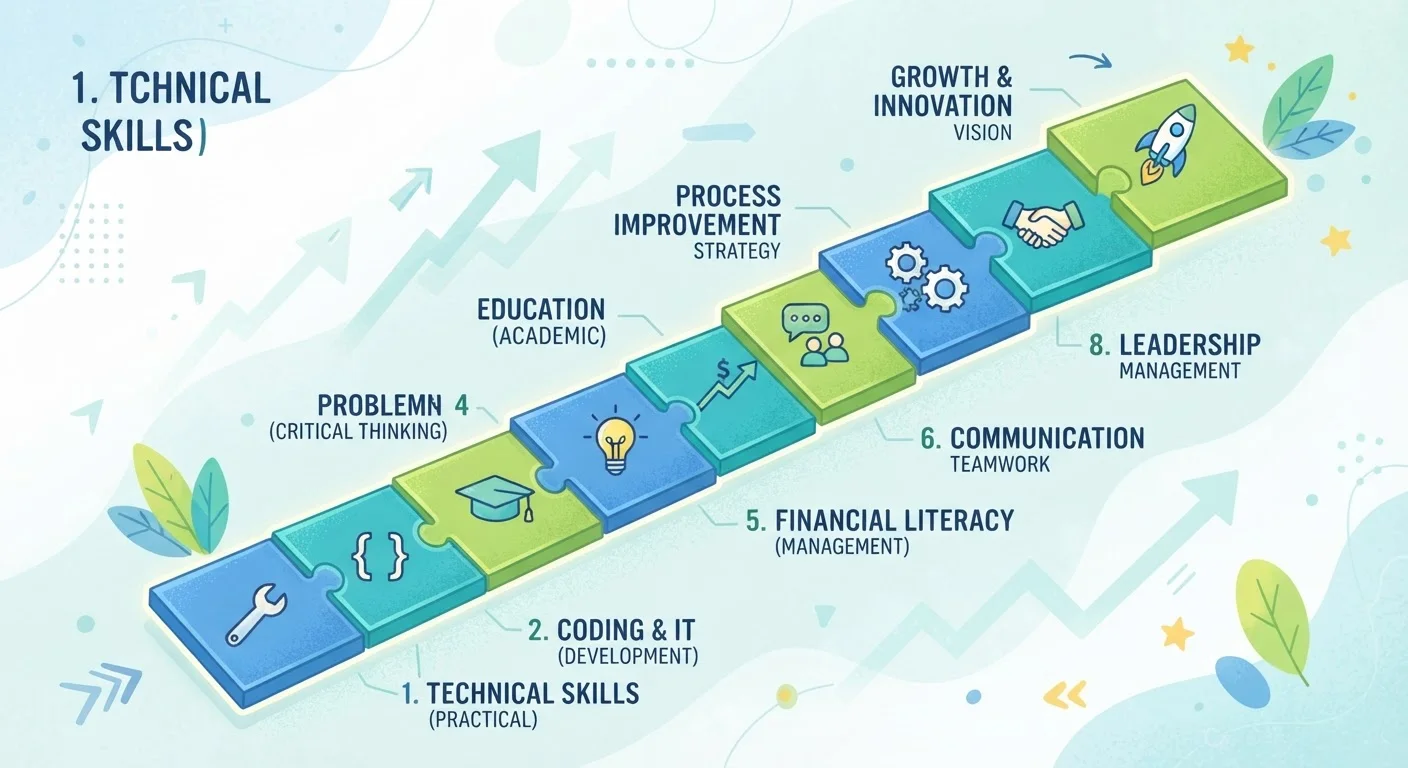
How the Stackable Model Actually Works
Think of stackable credentials as a structured learning staircase. Each step - an individual credential - is narrow enough to complete quickly but meaningful enough to demonstrate real competency to an employer. When you complete step one, you can enter or advance in the workforce immediately. When you complete steps two and three, you qualify for more senior roles or higher pay bands.
The critical design feature is that credentials in a stack are intentionally sequenced. A Level 1 credential covers foundational knowledge; a Level 2 credential builds on that foundation and adds more complex skills. A program built around improvised credential-collecting - taking unrelated short courses because they seem useful - is not a stackable pathway. Sequence and alignment are what distinguish the model.
In practice, stackable frameworks are often developed in partnership with industry groups, community colleges, and state workforce agencies. This means the skills mapped to each step are informed by what employers in that sector say they actually need - not just what an institution finds convenient to teach.
Articulation Agreements Are Not Automatic
Just because a credential is offered by a community college does not mean it automatically converts to academic credit elsewhere. Articulation agreements - formal arrangements between institutions - must exist in writing. Ask the institution's admissions or advising office directly whether a credit-transfer pathway exists for your specific program before you enroll.
Where Stackable Credentials Are Most Common
Stackable pathways are especially well-developed in fields where skills can be clearly defined, assessed, and sequenced. Healthcare is a prominent example: a learner might earn a Certified Nursing Assistant (CNA) credential first, then stack a Licensed Practical Nurse (LPN) qualification on top, and eventually reach a Registered Nurse (RN) credential - with each level representing a distinct employment tier.
Information technology follows a similar logic. Entry-level credentials like CompTIA IT Fundamentals can stack toward CompTIA A+, then Security+, and into more specialised certifications. Advanced manufacturing and construction trades also use this framework extensively, often through apprenticeship programs that combine on-the-job training with credential milestones.
If you're exploring free online learning options, it's worth checking whether any free courses are formally mapped to a recognised stackable pathway - or whether they simply offer standalone learning with no articulated next step.
What to Evaluate Before Committing to a Pathway
Not all credential programs marketed as "stackable" carry the same weight. Before you invest time and money, it pays to ask a few grounding questions.
- Who recognises this credential? Check whether industry employers, professional associations, or accrediting bodies acknowledge the credential - not just the institution offering it.
- Is there a formal articulation agreement? If you want credentials to count toward an academic degree later, verify that a written agreement exists between the provider and a degree-granting institution.
- What does the full pathway look like? A clearly mapped sequence with defined outcomes at each level is a good sign. Vague promises of "career advancement" are not.
- What is the cost at each stage? Community colleges and publicly funded workforce programs often provide the most affordable access. For a balanced view of cost considerations, see our guide on free vs. paid online certifications.
It's also worth reading about how major learning platforms differ in credential weight and structure - our breakdown of LinkedIn Learning, Coursera, and edX covers this in detail.
The Risk of Stacking Without Strategy
The appeal of earning credentials quickly can lead to a counterproductive pattern: accumulating qualifications that don't connect to each other or to a clear career goal. This is sometimes called credential sprawl, and it can make a résumé harder to read rather than more impressive.
A coherent stack - three credentials in a logical progression within a single field - signals commitment and mastery. A collection of ten unrelated short-course certificates may signal the opposite. As we explore in our related article on the opportunity cost of doing too many courses at once, focused learning tends to yield better outcomes than breadth for its own sake.
The most effective approach is to identify the career outcome you're working toward, map backward to find which credentials form a recognised pathway to that outcome, and then work through them in sequence - treating each step as both a milestone and a marketable qualification in its own right.
This article is for general educational and informational purposes only. Credential recognition, costs, and credit-transfer policies vary by institution and region. Consult relevant educational institutions, employers, and official workforce agencies before making enrollment decisions.