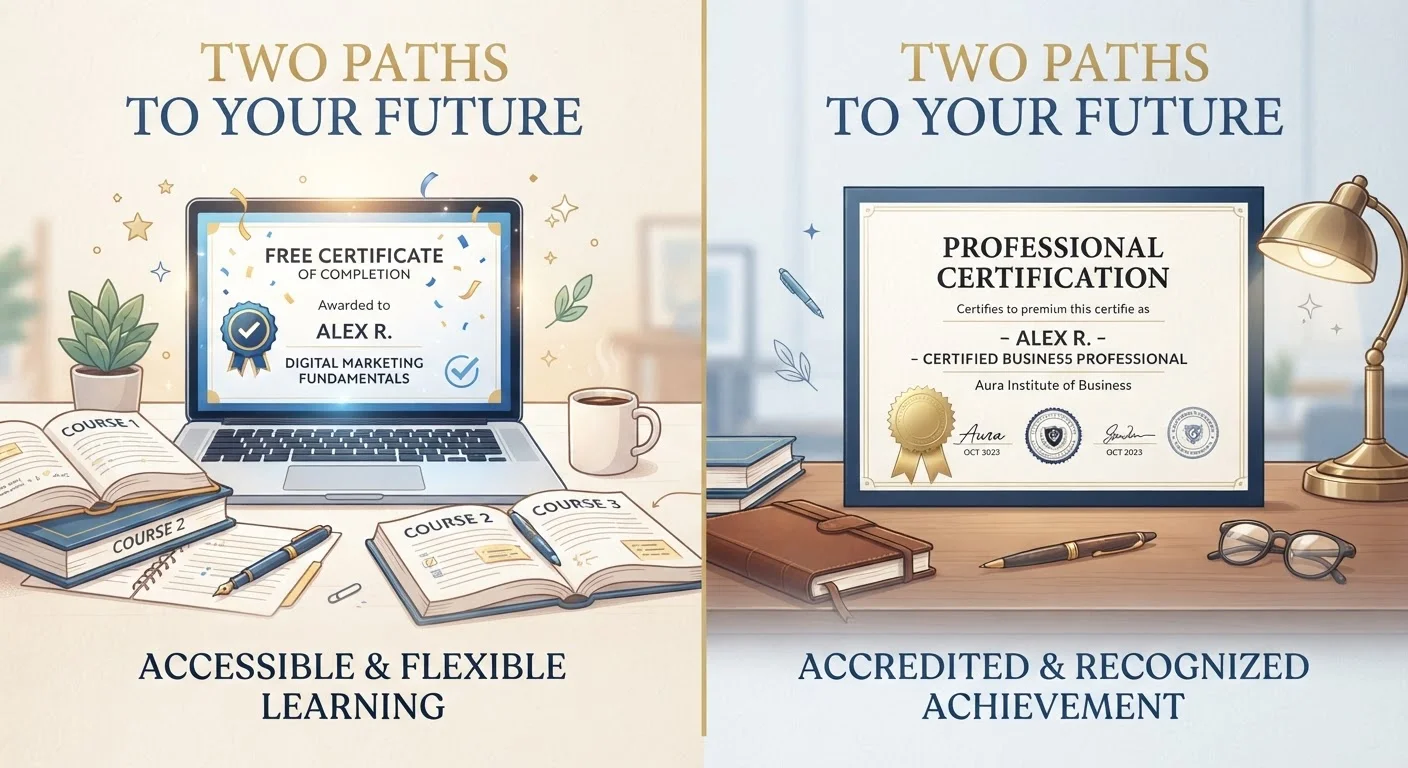
What Separates Free From Paid: The Core Distinction
The difference between free and paid online certifications goes beyond cost. It touches on how credentials are verified, what kind of assessment backs them, and whether employers in your target field recognize the issuing organization.
Free certifications - offered by platforms such as Coursera (audit track), edX, Khan Academy, or Google's own learning portals - typically provide access to course content at no charge. A completion certificate, if issued at all, may require a fee or may be freely included but carry no external verification system. Understanding the distinctions between MOOCs, open courseware, and free certificate paths can help you navigate what you're actually getting before you enroll.
Paid certifications, by contrast, usually include proctored assessments, digital badging tied to a verifiable registry, and the institutional reputation of the issuing body - whether that's a professional association, a major technology company, or an accredited academic institution. That infrastructure costs money to build and maintain, and learners share in that cost.
| Criterion | Free Certifications | Paid Certifications |
|---|---|---|
| Cost | No direct cost | Varies: tens to hundreds of dollars |
| Employer recognition | Field- and platform-dependent | Generally stronger with reputable issuers |
| Verification system | Often absent or limited | Usually includes digital badge or registry |
| Assessment rigor | Self-paced, often unproctored | Frequently includes proctored exams |
| Content quality | Can be high on major platforms | Varies; not guaranteed by price |
| Best career stage | Exploration, supplemental learning | Active job search, career transition |
| Financial risk | None | Moderate; research before committing |
Where Free Certifications Genuinely Deliver
Free certifications are not second-tier by default. In certain fields and contexts, they carry real weight. Some subject areas where free online learning genuinely competes with formal education include data literacy, programming fundamentals, digital marketing basics, and design thinking - domains where a demonstrable portfolio can outweigh a certificate name.
For learners already employed who want to signal growth within their current organization, or for those building a personal project portfolio, free certifications can be a practical, low-risk starting point. The content quality on major open platforms is often developed by university faculty or industry practitioners, meaning the learning itself can be rigorous even when the credential carries less formal weight.
The key limitation is verification. Many employers use applicant tracking systems or background screening services that check credentials against issuer registries. Free certificates that lack a digital verification link may simply not appear in those systems, regardless of the skills they represent. A fuller breakdown of what free learning gives you - and what it doesn't can help you set realistic expectations.
When Paid Certifications Justify the Cost
Paid certifications earn their price when the issuing organization has direct relationships with employers in your target sector. Vendor certifications in cloud computing, cybersecurity, and project management - issued by organizations with established industry relationships - are regularly referenced in job postings and understood by hiring managers without needing additional explanation.
Cost, however, is not a proxy for quality. Some expensive certifications are offered by organizations with little employer recognition, while others at moderate price points carry significant industry credibility. Before paying, research whether the credential appears in job listings in your target field, and whether professional communities in that field discuss it as a meaningful marker of competency.
One practical middle path: many platforms separate content access from credentialing. Auditing a course for free lets you assess whether the material matches your goals before paying for the verified certificate. This approach reduces financial risk while still allowing access to paid-tier credentials when they matter. For those thinking about how credentials can compound over time, understanding stackable credentials and how they build toward qualifications offers useful context on building a progressive pathway.
76%
Employers who value demonstrated skills alongside credentials
According to a LinkedIn Workplace Learning Report, the majority of hiring professionals say demonstrated skills matter alongside formal credentials when evaluating candidates.
$0-$300+
Typical price range for online certifications
Costs vary significantly depending on the issuing body, with many professional certifications falling in the $150-$300 range and some vendor exams exceeding that.
This article is for general informational and educational purposes only. Career outcomes depend on many individual factors; no credential guarantees employment or a specific result. Consult a career advisor or qualified professional for guidance tailored to your situation.