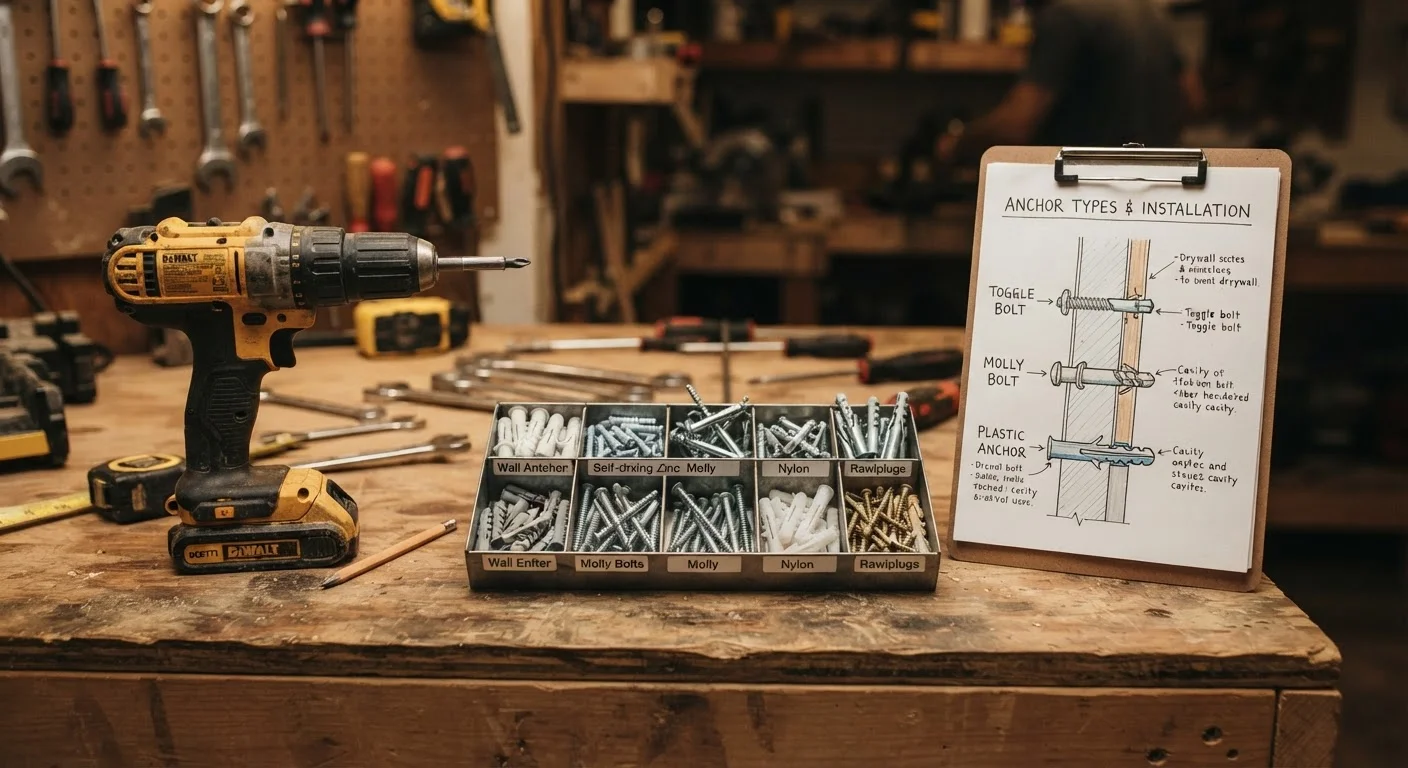
Why Wall Type Changes Everything
Every year, shelves fall, TVs tip, and mirrors crack - usually because someone used the wrong fixing for the wall behind them. The problem isn't always the product; it's the mismatch. A screw that bites firmly into brick will spin uselessly in hollow plasterboard. A toggle bolt that opens perfectly behind drywall is useless in a solid concrete wall. Getting this right costs almost nothing extra, but getting it wrong can mean damaged walls, broken belongings, or worse.
Before buying any anchor, identify your wall type. Knock on the surface: a hollow sound usually means plasterboard (also called drywall) over a frame; a dense thud suggests solid masonry like brick or concrete block. A stud finder - available at any hardware store for under $20 - helps you locate the timber or metal studs behind drywall. Once you know what you're working with, the list below maps each wall type to the fixing that handles it best.
Quick Wall-Type Test Before You Buy
Knock firmly on the wall in several spots and listen carefully. A hollow knock with slight flex suggests plasterboard over a timber or metal frame. A solid, dense sound with no flex points to masonry. If you're still unsure, probe a discreet spot with a thin finishing nail - it will slide easily into plasterboard but stop almost immediately at brick or concrete. Knowing this before you visit the hardware store saves a wasted trip.
5 Common Wall Fixings and When to Use Each
Plastic Expansion Anchors (Rawlplugs) - Best for Solid Masonry
The humble plastic rawlplug is the go-to fixing for brick, concrete block, and stone. You drill a hole that matches the plug's diameter, tap the plug flush with the surface, then drive a screw through it. As the screw tightens, the plug expands outward and grips the surrounding material.
Best for: Picture hooks, curtain rail brackets, coat hooks, and lightweight shelves on solid masonry walls.
Limitations: These do not work in hollow walls - with no solid material to grip, they simply pull straight out. Also match the plug size to the screw size; packaging lists the compatible screw gauge and the corresponding drill bit diameter. Using a mismatched combo reduces holding strength significantly.
Rawlplugs expand inside solid masonry - they offer virtually no grip in hollow walls.
Screw Anchors (Self-Drilling Drywall Anchors) - Fastest Fix for Light Loads on Plasterboard
Self-drilling screw anchors are threaded plastic or metal sleeves that you drive directly into drywall with a screwdriver - no pre-drilling required in most cases. They work by threading into and gripping the gypsum core of plasterboard from the front face.
Best for: Lightweight items such as small framed pictures, toilet roll holders, and hooks - generally up to about 20-25 lbs depending on anchor rating.
Limitations: They are not suitable for solid masonry and should not be used for anything heavy or with significant outward pull (like a towel bar subjected to regular downward force). Check the rated load on the packaging and stay well within it.
Self-drilling anchors are the fastest option for light loads on plasterboard - no pre-drill needed.
Toggle Bolts (Butterfly Anchors) - Highest Hollow-Wall Load Capacity
Toggle bolts use a spring-loaded metal wing that folds flat for insertion and then opens behind the drywall, spreading load across a wider area of the panel. They require a larger pilot hole than screw anchors but carry substantially more weight.
Best for: Heavier items on plasterboard where hitting a stud isn't possible - shelving brackets, large mirrors, wall-mounted shelves carrying moderate loads. A standard 1/4-inch toggle bolt can typically hold 50-100 lbs in 1/2-inch drywall, though always verify the manufacturer's rated capacity for your specific product.
Limitations: If you remove the bolt, the toggle falls inside the wall and cannot be retrieved. They also require a precise hole size - too small and the toggle won't pass through; too large and it won't grip the backside of the panel adequately.
Toggle bolts spread load across the back of the drywall panel, making them the strongest hollow-wall option.
Snap-Toggle / Strap Toggle Anchors - Reusable and More Controlled
Snap-toggle anchors (sometimes called strap toggles or TOGGLER-style anchors) improve on the classic toggle bolt by using a plastic strap to hold the metal bar in place while you tighten the bolt. Once the bar is seated against the back of the wall, you snap off the excess strap and the anchor stays in place even if you remove the bolt - making it reusable.
Best for: Medium to heavy items on drywall where you may need to remove and rehang the fixing - a TV mount that you might adjust, or a shelf you plan to reposition.
Limitations: Slightly more fiddly to install than a basic toggle bolt and costs more per anchor. They're available in several bolt diameters; use the size appropriate to your load and wall thickness.
Snap-toggle anchors stay in place when the bolt is removed, so you can rehang without re-drilling.
Screwing Directly Into Studs - The Strongest Option of All
No anchor outperforms a screw driven directly into a timber or metal stud. Studs in US residential construction are typically spaced 16 inches apart (occasionally 24 inches), and locating them with a stud finder before you drill is always worth the two extra minutes it takes.
Best for: Heavy shelving, large TVs, bike racks, pull-up bars, and anything where long-term reliability matters. A standard 3-inch wood screw into a timber stud can hold well over 100 lbs under normal conditions.
Limitations: Studs may not be where you need your fixing to go. In that case, use a hollow-wall anchor rated for the load, or install a horizontal timber batten across two studs and fix your bracket to the batten. For metal stud framing (common in newer construction), use self-tapping metal screws rather than wood screws.
A screw into a timber stud is the gold standard - no anchor matches it for long-term load capacity.
If a hanging job goes wrong and leaves a mark, our guide on patching drywall holes walks through repairs by hole size so you can restore the wall cleanly before trying again.
A Few Rules That Apply to Every Fixing
Regardless of anchor type, a handful of habits keep every hanging job safer. First, always check the rated load capacity printed on the anchor packaging - it reflects the maximum static load under ideal conditions, so treat it as a ceiling, not a target. Second, pre-drill pilot holes to the diameter the anchor specifies; forcing an oversized plug into an undersized hole cracks plasterboard and weakens brick. Third, for anything heavier than about 30 pounds, aim for a wall stud or solid masonry if at all possible - no hollow-wall anchor fully substitutes for solid backing at high loads. Finally, if you're working near electrical conduit, plumbing, or gas lines hidden in walls, stop and verify the area is clear before drilling. When in doubt on structural walls, load-bearing elements, or any masonry work in an older home, consulting a licensed professional is the safest call.
This article is for general informational purposes only. Always verify that your chosen fixing meets the load requirements of your specific application, and consult a qualified professional for structural or safety-critical installations.