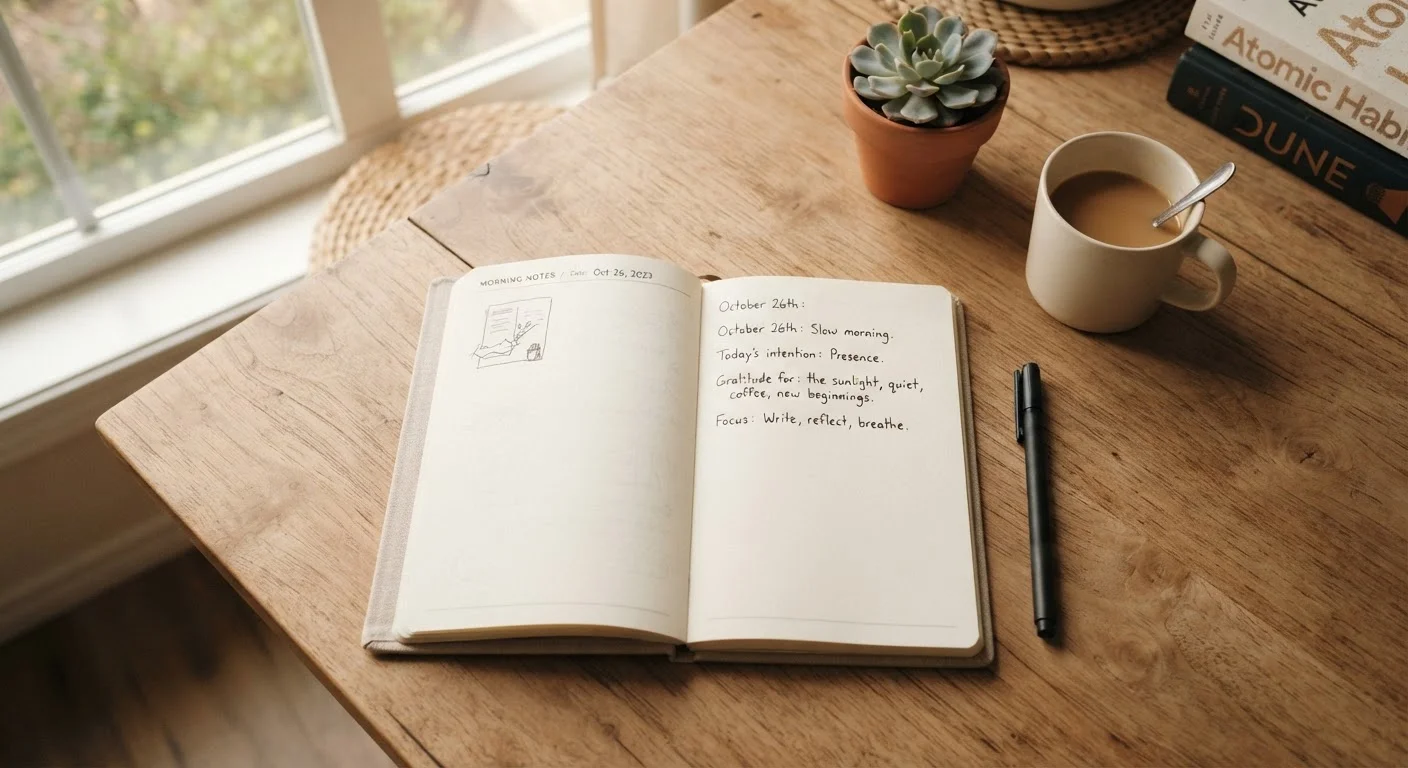
Why Journaling Can Support Mental Health
Writing about your thoughts and feelings isn't just a personal preference - there's a meaningful body of research supporting its role in emotional well-being. Psychologist James Pennebaker conducted foundational studies showing that expressive writing - putting difficult emotions and experiences into words - can help people process stress and reduce its physical and psychological effects over time.
More recent research has explored how journaling may support what psychologists call cognitive processing: the mental work of making sense of confusing or overwhelming experiences. When emotions stay abstract and swirling in your head, they can feel unmanageable. Writing them down gives them structure, which can make them easier to examine and, eventually, set aside.
For anyone already exploring low-cost mental wellness strategies, journaling pairs naturally with other evidence-informed habits. For example, techniques drawn from psychology like breathing exercises and nature exposure all operate on similar principles: accessible, inexpensive, and supported by real research.
Expressive writing
A form of journaling where you write openly about your thoughts and feelings - particularly difficult or stressful ones - rather than just recording events.
Cognitive processing
The mental work of making sense of an experience or emotion. Writing can support this by turning vague feelings into organized thoughts.
Rumination
Repeatedly replaying negative thoughts or worries without resolving them. Journaling is sometimes used as a way to externalize and interrupt this cycle.
Gratitude journaling
A specific journaling practice focused on noticing and recording positive experiences, however small, with the aim of shifting attention patterns over time.
Habit stacking
Attaching a new behavior to an existing routine - like journaling right after making coffee - to make the habit easier to remember and sustain.
What You Actually Need to Start
One reason journaling is so accessible is its near-zero cost barrier. You do not need:
- A dedicated journal or premium notebook
- A journaling app or subscription
- A special time of day
- Writing skill or a gift for language
A scrap of paper, a free notes app on your phone, or the back pages of a school notebook all work equally well. The practice is about the process of writing, not the medium. If buying a notebook you enjoy writing in motivates you, that's a valid choice - but it's entirely optional.
Privacy is worth thinking about. Many people write more honestly when they trust their journal won't be read by others. Choose a format - physical or digital - that you can keep private without effort. That sense of safety tends to make the writing more useful.
Simple Journaling Formats for Beginners
There's no single correct way to journal. Below are three beginner-friendly formats you can experiment with to find what resonates.
1. Free Writing
Set a timer for five to ten minutes and write continuously without stopping to edit or judge. The only rule is to keep the pen moving. This format is useful for releasing pent-up thoughts and can feel like a mental pressure valve. It works especially well for interrupting overthinking patterns by externalizing rumination onto the page.
2. Prompted Journaling
Use a specific question to focus your writing session. Starter prompts include:
- What's weighing on me right now, and why?
- What went well today, even in a small way?
- What would I tell a friend going through what I'm experiencing?
Prompts reduce the blank-page paralysis that often stops people from beginning.
3. Gratitude Journaling
Write down two to five things you noticed or appreciated during the day. Research suggests that regularly reflecting on positive experiences - even minor ones - can gradually shift attentional habits toward the constructive. This format takes under five minutes and is easy to attach to an existing routine like having morning coffee or winding down before bed.
Building the Habit Without Pressure
Consistency is the variable that makes journaling useful. A short, regular practice tends to deliver more benefit than occasional long sessions. Here's how to make it stick:
- Attach it to something you already do. Writing after brushing your teeth or before checking your phone in the morning reduces the friction of remembering.
- Start absurdly small. Commit to two or three sentences, not pages. You can always write more, but the low bar makes it easier to begin on tired days.
- Remove the performance pressure. Your journal doesn't need to be eloquent, coherent, or complete. Incomplete thoughts, bullet points, and crossed-out sentences are all fine.
- Don't treat missed days as failures. The goal is a long-term practice with natural variation, not a perfect daily streak.
Journaling works well alongside other low-cost mental wellness habits. If you're building a broader self-care routine, the personal mental wellness toolkit guide offers a practical framework for identifying which strategies suit you and making them sustainable.
The Two-Sentence Rule
On days when motivation is low, give yourself permission to write just two sentences. "I don't feel like writing today, and here's what's going on..." counts as a valid session. Getting something onto the page consistently is far more valuable than waiting for a day when you feel inspired to write at length.
When Journaling Has Limits
Journaling is a general wellness support practice - not a clinical intervention. It's worth being clear about what it can and cannot do.
It may help you:
- Process everyday stress and frustration
- Spot recurring emotional patterns over time
- Slow down reactive thinking before acting on it
- Build a habit of self-reflection
It is not a substitute for professional mental health care. If you're experiencing persistent low mood, anxiety that interferes with daily functioning, thoughts of self-harm, or other significant distress, please speak with a licensed mental health professional. A therapist or counselor can offer support that no self-directed practice can replicate.
Similarly, journaling is one piece of a larger picture. Pairing it with physical movement - even informal everyday activity - can amplify its benefits. Everyday movement as a mental health tool and time spent outdoors are similarly low-cost habits worth considering alongside a regular writing practice.
This article is for general informational and educational purposes only and does not constitute medical or mental health advice. Always consult a qualified healthcare or mental health professional for concerns about your personal wellbeing.