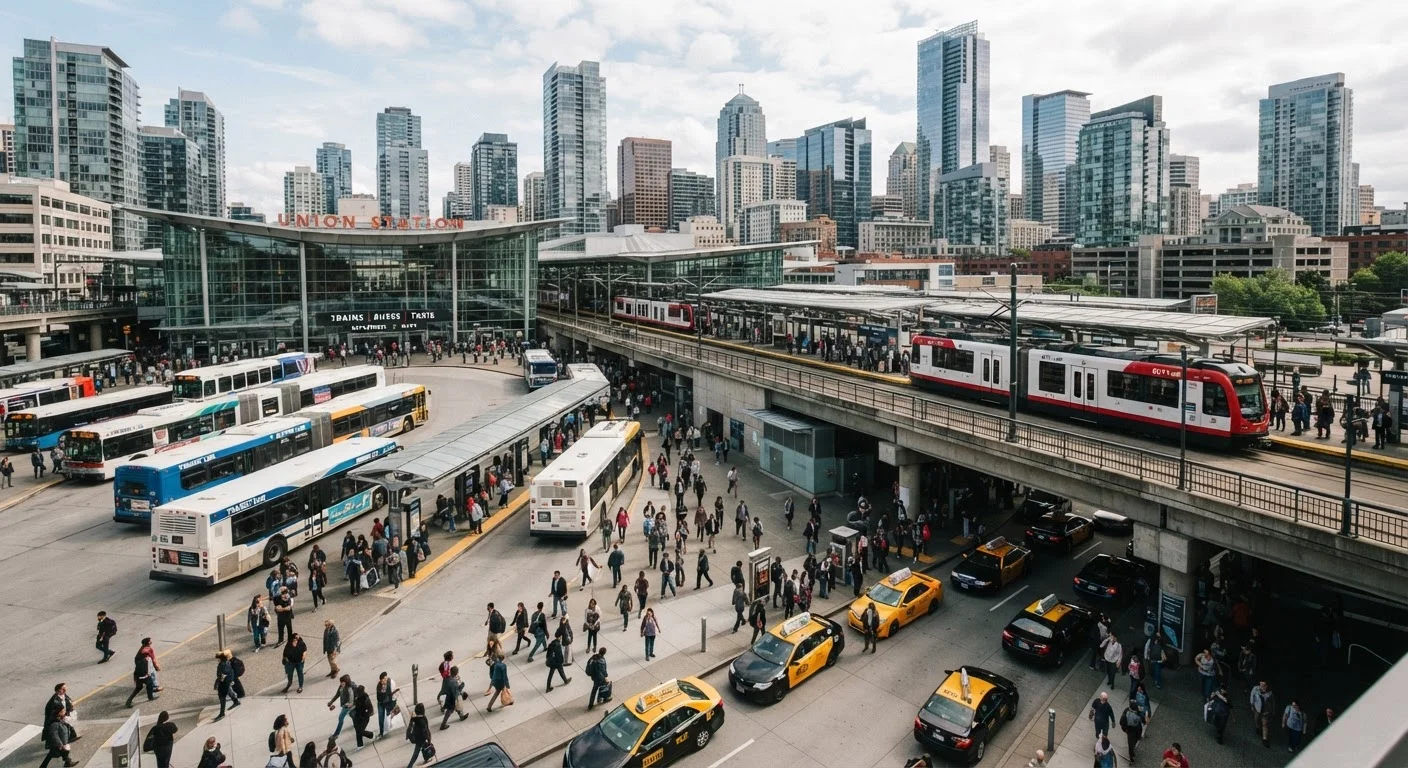
Why Ground Transport Costs Are Easy to Misjudge
Most travelers fixate on airfare and accommodation while treating ground transport as an afterthought - then get surprised when a round-trip airport transfer costs $80-$120 in a major US city. Ground transport can realistically account for 10-20% of a short urban trip's total budget, particularly when the traveler picks the wrong mode for their situation.
The core variables are straightforward: group size, luggage volume, time of day, distance to destination, and whether the airport has direct public transit access. Weigh those factors first, and the cost comparison becomes much easier to navigate. See our guide on how location choice shapes total travel spend for context on why staying near transit hubs pays off across your whole trip.
Comparing the Four Main Options
Here's how the four standard airport ground transport modes stack up across the criteria that matter most to budget-conscious travelers.
| Public Transit | Rideshare | Taxi | Airport Shuttle | |
|---|---|---|---|---|
| Typical cost per person | $3-$10 | $25-$55 (solo) | $30-$60 (solo) | $20-$35 |
| Group cost scaling | Multiplies per head | Fixed fare, split-friendly | Fixed fare, split-friendly | Multiplies per head |
| Surge pricing risk | None | High at peak times | None (metered) | None |
| Travel time reliability | High on rail; variable on bus | Moderate (traffic dependent) | Moderate (traffic dependent) | Low (multiple stops) |
| Luggage handling ease | Low (stairs, crowding) | High | High | Moderate |
| Late-night availability | Limited or none | 24/7 in most cities | 24/7 at airports | Limited, pre-book required |
| Best group size | Solo or 2 | 2-4 | 2-4 | Solo |
A few notes on reading this table: the cost ranges reflect typical US major-city conditions (think Chicago, Los Angeles, Atlanta, or New York). Actual fares vary by market, time of booking, and surge pricing status. Always verify current fares through official transit authority websites or app-based fare estimators before traveling.
When Public Transit Wins - And When It Doesn't
Direct rail links - like Chicago's Blue Line to O'Hare, the DC Metro to Reagan National, or BART to SFO - typically run $3-$10 per person and deliver consistent travel times outside of rail disruptions. For a solo traveler with a carry-on, this is almost always the right call. An express bus option (common at airports without direct rail) can be equally effective, typically running $2-$7.
Public transit loses its edge in three situations: when the airport lacks a direct rail or express bus connection, when you're traveling late at night with limited service frequency, or when you have multiple large bags and no one to help you navigate stairs and packed cars. In those cases, comfort and logistics costs are real, even if they don't appear in the fare.
Rideshares vs. Taxis: A Closer Look
Rideshares have largely displaced traditional taxis on per-mile cost in most US cities, but the gap narrows or reverses during surge pricing - which often kicks in exactly when flights arrive (peak evening hours, holiday weekends). A standard UberX or Lyft from LAX to Downtown LA runs roughly $35-$55 in normal conditions; that same trip during a surge can exceed $90.
Taxis, by contrast, use metered fares regulated by local authorities, meaning pricing is predictable regardless of demand. At airports like JFK or Midway, fixed-rate taxi zones exist for specific destinations, removing surge risk entirely. For two travelers splitting the cost, a taxi can match or beat a rideshare on total outlay while offering fare certainty.
If you're planning a multi-stop trip where ground transport decisions compound across cities, our multi-destination trip planning guide covers how to sequence transport choices across an itinerary.
Airport Shuttles: The Niche Case
Shared-ride shuttle vans typically price between $20-$35 per person but involve multiple stops, which adds 30-60 minutes to total travel time. They make financial sense primarily for solo travelers headed to suburban hotels not well-served by transit or rideshare pooling options - or for those who want a fixed price without any booking complexity.
For two or more travelers, a rideshare or taxi almost always delivers better total value: similar or lower cost, direct routing, and no waiting for other passengers to be dropped off first.
To put ground transport into the broader picture of keeping trip costs manageable, see our practical strategies for keeping travel costs down.
This article provides general travel information for educational purposes only. Fares, routes, and service availability change frequently. Always verify current pricing and schedules directly with transport providers or official transit authority sources before traveling.