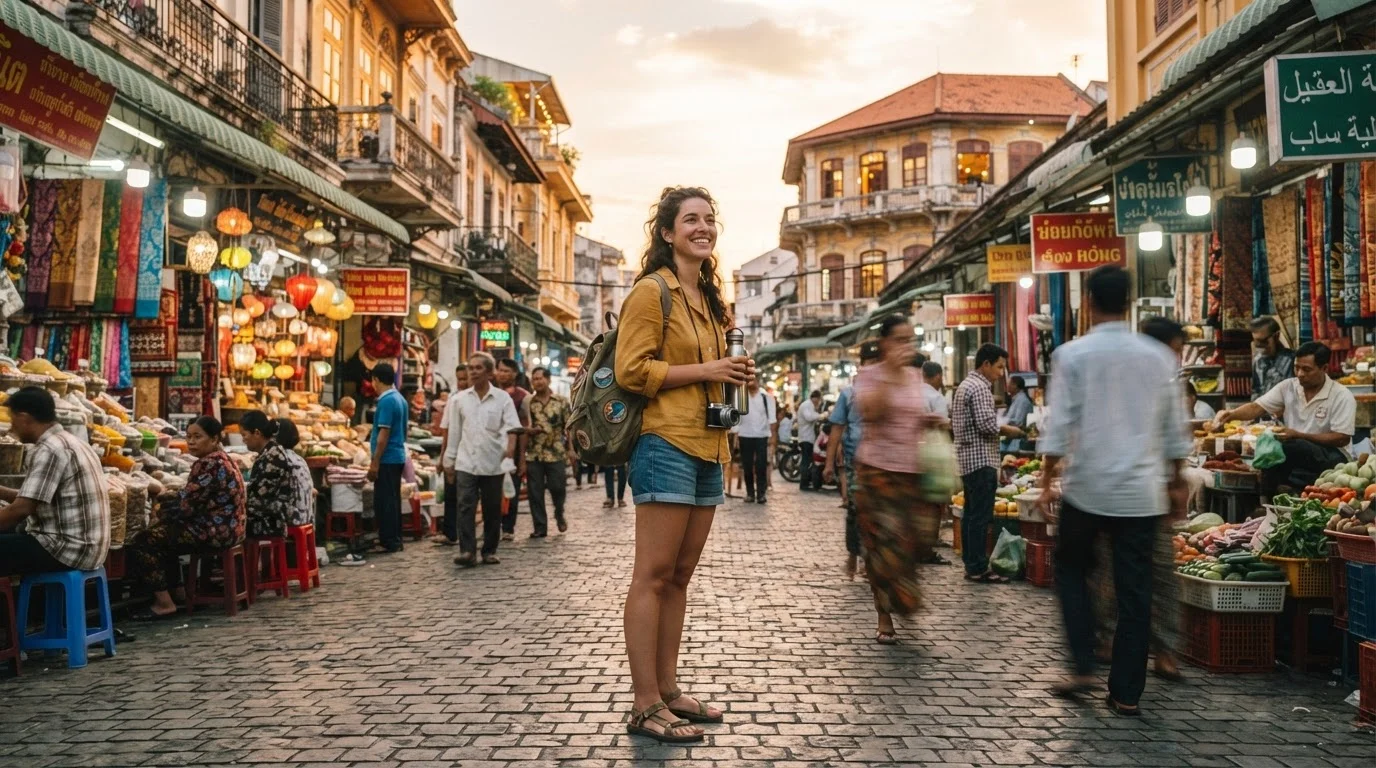
Choosing the Right Destination for Your Budget
Where you go determines more about your total spend than almost any other decision. A two-week trip to Western Europe will cost significantly more than two weeks in Southeast Asia or Central America, even if you make identical choices on flights and accommodation quality.
For US-based first-timers, three regions consistently offer strong value:
- Southeast Asia - Countries like Vietnam, Thailand, and Cambodia have low daily costs for food and accommodation, well-developed backpacker infrastructure, and major international airports served by competitive routes.
- Central America - Guatemala and Nicaragua offer low day-to-day costs, short flight times from the US, and no long-haul fatigue to manage.
- Eastern Europe and Portugal - Generally more affordable than Western Europe, with strong public transport networks and manageable flight costs from major US hubs.
Before committing to a destination, verify visa requirements and any current entry conditions through official US government travel resources. Requirements change, and what applied six months ago may not apply now. See our starter guide for first-time independent travelers for a fuller breakdown of destination research steps.
Shoulder Season
The period just before or after a destination's peak tourist season. Crowds and prices are typically lower, while weather is often still reasonable.
Purchasing Power
How much your money can actually buy in a given country. A strong US dollar means your money goes further in countries with weaker currencies.
Daily Budget
The total amount you plan to spend per day on the ground, covering food, accommodation, transport, and activities - excluding flights.
Contingency Fund
A reserved portion of your travel budget (typically 10-15%) set aside for unexpected costs like medical expenses, rebooking fees, or emergencies.
Visa on Arrival
A travel permit issued at the border or airport of your destination country, rather than requiring advance application. Eligibility varies by nationality and destination.
STEP (Smart Traveler Enrollment Program)
A free US State Department service that registers your trip abroad, allowing the embassy to contact you in an emergency and providing travel alerts for your destination.
When to Book - and Why Timing Matters
Airfare is typically your largest single expense on an international trip, so booking strategy matters. While no formula guarantees the lowest fare, research from flight data aggregators generally suggests that international routes from the US tend to see competitive pricing when booked roughly 6-10 weeks in advance - though this varies significantly by route and season.
Equally important is when you travel, not just when you book. Flying midweek (Tuesday through Thursday) rather than Friday or Sunday frequently produces lower fares on the same route. Avoiding school holidays and major local festivals at your destination also reduces both flight costs and accommodation rates.
Consider these timing principles:
- Shoulder season (the period just before or after peak tourist season) often delivers good weather alongside noticeably lower prices.
- Red-eye and connection-heavy itineraries are less convenient but typically cheaper than direct daytime flights.
- Flexible travel dates - even by two or three days - can meaningfully reduce fare totals on some routes.
For a broader look at how trip timing fits into overall financial planning, our student budgeting guide covers how to set aside travel funds in a structured way.
Understanding Currency and Daily Costs
One of the most useful concepts for budget international travel is purchasing power - the idea that your US dollars buy more in countries where the local currency is weaker or where price levels are structurally lower. A $50/day budget in Vietnam covers comfortable guesthouse accommodation and three meals; the same amount in Switzerland covers very little.
Before you depart, do three things:
- Research the approximate daily cost of accommodation, a restaurant meal, and local transport at your destination. Travel forums and destination-specific budget guides are useful here.
- Notify your bank of your travel dates to prevent automatic fraud blocks on your card.
- Check whether your debit card charges foreign ATM fees - some accounts refund these, many don't.
Airport currency exchange kiosks typically offer poor rates. In most destinations, withdrawing local currency from a bank-affiliated ATM after arrival is more cost-effective. Carrying a small amount of US dollars as an emergency backup is also sensible in regions where ATM access can be inconsistent.
For a region-by-region breakdown of approximate daily budgets and currency context, see our currency and costs quick reference.
Building a Realistic International Travel Budget
A common mistake first-time travelers make is budgeting only for flights and accommodation, then being caught off-guard by everything else. A complete budget should cover six categories:
| Category | What to Include |
|---|---|
| Flights | Round-trip airfare, any checked baggage fees |
| Accommodation | Per-night cost × number of nights |
| Food | Daily meal estimate × trip length |
| Local Transport | Buses, trains, tuk-tuks, metro passes |
| Activities | Entry fees, tours, experiences |
| Contingency | 10-15% of total budget for unexpected costs |
Write the numbers down before you book anything. If the total exceeds what you have available, adjust destination, trip length, or travel dates - not the contingency fund. That buffer exists for a reason.
Our budget travel from scratch guide goes deeper on how individual spending decisions compound across a full trip.
What First-Time Budget Travelers Should Actually Expect
Budget travel is not luxury travel with the price tag removed. It involves trade-offs: shared dormitory rooms, slower ground transport instead of taxis, cooking occasionally instead of eating out every meal. Understanding this upfront prevents disappointment and helps you decide which trade-offs you're genuinely comfortable making.
A few realistic expectations worth setting:
- Things will go wrong. Delayed buses, booking errors, and unexpected closures are normal. Build buffer days into your itinerary where possible.
- Safety requires basic awareness. Research neighborhood safety, keep digital copies of your documents, and register your trip with the US State Department's Smart Traveler Enrollment Program (STEP) - it's free.
- Language barriers are manageable but real. Translation apps have significantly reduced friction, but learning 10-15 words in the local language is still worth doing.
- Costs at tourist hotspots are higher. Prices in heavily visited areas - markets, airport zones, famous landmarks - are routinely inflated. Walking two blocks away often halves the cost of a meal.
For more on structuring the planning process end-to-end, the Travel Planning Tips hub covers everything from documentation to departure-day checklists.
This article provides general travel information for educational purposes. Entry requirements, visa rules, and travel conditions change frequently - always verify current requirements through official US government sources and your destination country's embassy before booking or traveling.