What Envelope Budgeting Actually Is
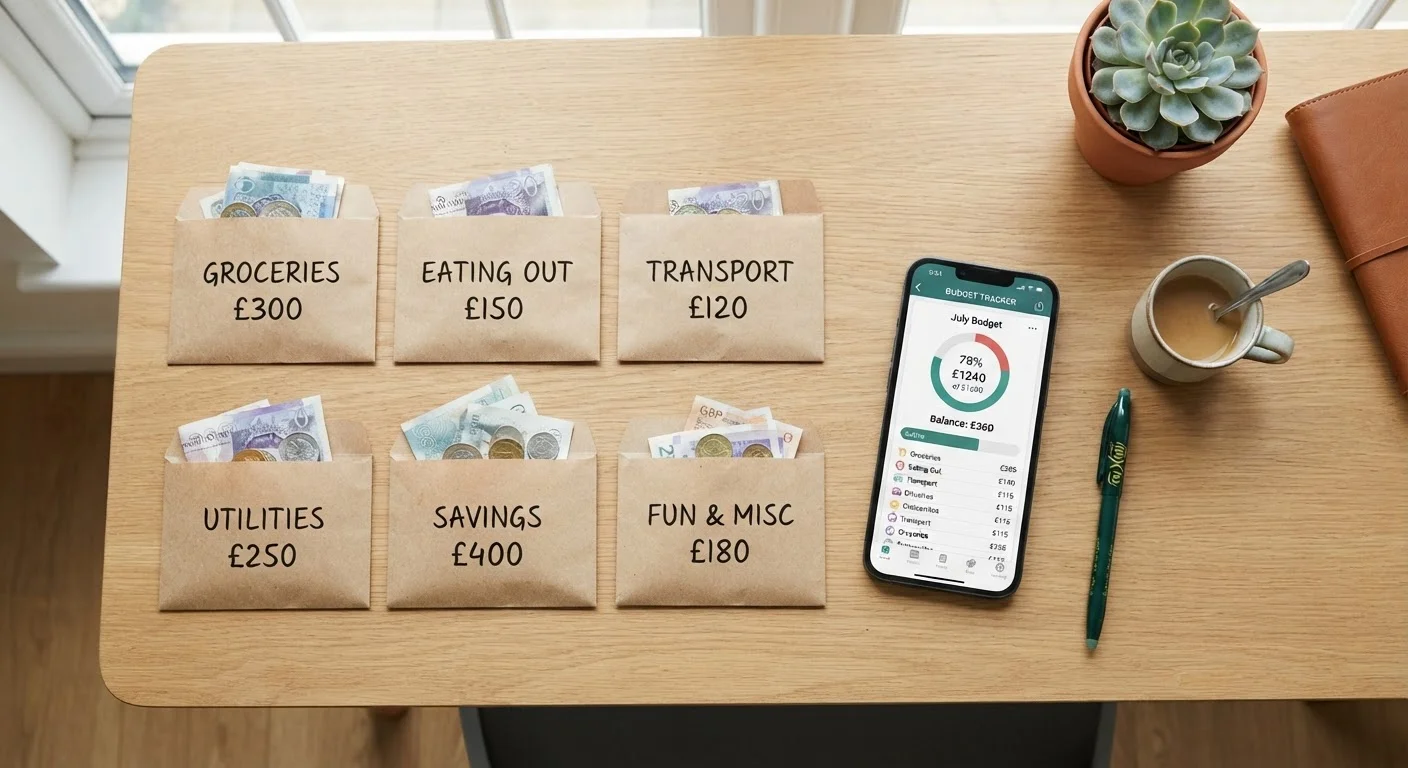
Envelope budgeting is a cash-allocation system with a straightforward premise: at the start of each pay period, you divide your available income into labeled envelopes - one per spending category. When the money in an envelope is gone, spending in that category stops until the next pay period.
In its original form, those envelopes were literal: a paper sleeve marked "Groceries" held $300 in cash, and when you handed over the last bill, you stopped buying groceries until payday. The tactile experience created a spending boundary that a bank balance never could, because a balance is abstract - an envelope is concrete.
If you're new to structured budgeting in general, the plain-language budgeting guide is a useful starting point before diving into a specific method. And if you want to see how envelope budgeting compares to other approaches side by side, a breakdown of every major budgeting method lays out the trade-offs honestly.
The method's enduring appeal is that it makes overspending a deliberate choice rather than an accident. You can still move money between envelopes - but doing so requires a conscious decision, not just a swipe.
Translating the System to Digital Tools
Living in a world of debit cards and direct deposit doesn't mean abandoning the envelope logic - it means recreating that logic digitally. There are two practical routes most people use.
Option 1: Bank Sub-Accounts
Many banks and credit unions allow you to open multiple savings or checking sub-accounts at no cost. You name each one after a spending category - "Rent," "Groceries," "Entertainment" - and transfer the allocated amount into each account every payday. Spending from each sub-account mirrors spending from a physical envelope.
Option 2: Budgeting Apps
Several apps are built specifically around the envelope model. They let you create virtual envelopes, fund them with your income, and track every transaction against the right category. When a category hits zero, the app flags it. You don't need to recommend any particular app to use this approach - the concept works across many tools, so choose one that fits your bank and workflow.
Start With Fewer Envelopes
New users often create too many categories upfront, which makes tracking tedious. Begin with five to eight broad envelopes and split them only once you have a month of data. Complexity is easier to add than to unwind when motivation dips.
Whichever route you choose, the critical discipline is the same: fund your envelopes before spending, not as a retroactive label for money already gone. That sequencing is what separates a real envelope budget from a spending diary.
For a broader look at spending-tracking methods - including options suited to students or low-income months - see spending-tracking approaches that actually stick.
Step-by-Step: Setting Up Your Digital Envelopes
Follow these steps once per month or at the start of each pay period. The initial setup takes the most time; maintaining it becomes quick.
Calculate your monthly take-home income
Add up every reliable source of after-tax income for the month: wages, freelance pay, side income. Use the lowest realistic month if your income varies - it's easier to add leftover funds than to scramble when short.
List every spending category you need
Write down every category where money leaves your account: rent or mortgage, utilities, groceries, transportation, dining out, subscriptions, personal care, savings contributions, debt payments, and any irregular expenses. Don't skip categories - every dollar needs a home.
Assign a dollar amount to each category
Work from your fixed expenses first (rent, loan minimums, utilities) since those amounts are non-negotiable. Then allocate to variable categories based on past spending or realistic targets. The total of all envelopes must equal - not exceed - your take-home income.
Fund your envelopes on payday
The moment your paycheck lands, transfer the allocated amounts into each sub-account or mark them as funded in your app. Do this before any discretionary spending. Treating this as a payday ritual - not an afterthought - is what makes the system reliable.
Track every transaction in real time
Each time you spend, deduct it from the correct envelope immediately - at the register, not at the end of the week. Delayed tracking leads to phantom spending: money that's gone but not yet accounted for, which makes your envelopes look fuller than they are.
Review and reset at the end of each period
At the end of the month or pay period, check every envelope. Note which ones ran dry early, which had leftover funds, and whether any categories were missing. Roll surplus savings-category funds forward; reset spending categories to zero. Use this review to adjust allocations for the next period.
This article provides general financial education and is not personalized financial advice. For guidance specific to your situation, consider consulting a qualified financial professional.
Common Pitfalls and How to Avoid Them
Even a well-designed envelope budget can stall. The most common breakdown points are worth knowing in advance.
- Underfunding irregular categories. Expenses like car repairs, medical copays, or annual subscriptions don't arrive monthly, but they do arrive. Build a "Irregular Expenses" envelope funded with a small monthly contribution so these costs don't blow up another category.
- Moving money too easily. The whole point of the system is spending friction. If you shuffle funds between envelopes without acknowledgment, you lose that feedback. Some people add a simple rule: you can move money, but you have to note why, every time.
- Setting unrealistic category amounts. If your grocery envelope is too small to cover real spending, you'll abandon the system within a week. Spend one month simply tracking before allocating - a full budgeting lifecycle guide covers how to calibrate categories against real income and expenses.
Envelope budgeting pairs naturally with goals like paying down debt. Once you see discretionary categories clearly, redirecting surplus funds becomes straightforward - the Credit & Debt hub has practical guidance on prioritizing payoff strategies once your budget is stable. The Saving & Frugal Tips hub is also worth exploring for ideas on stretching each envelope further without sacrificing essentials.