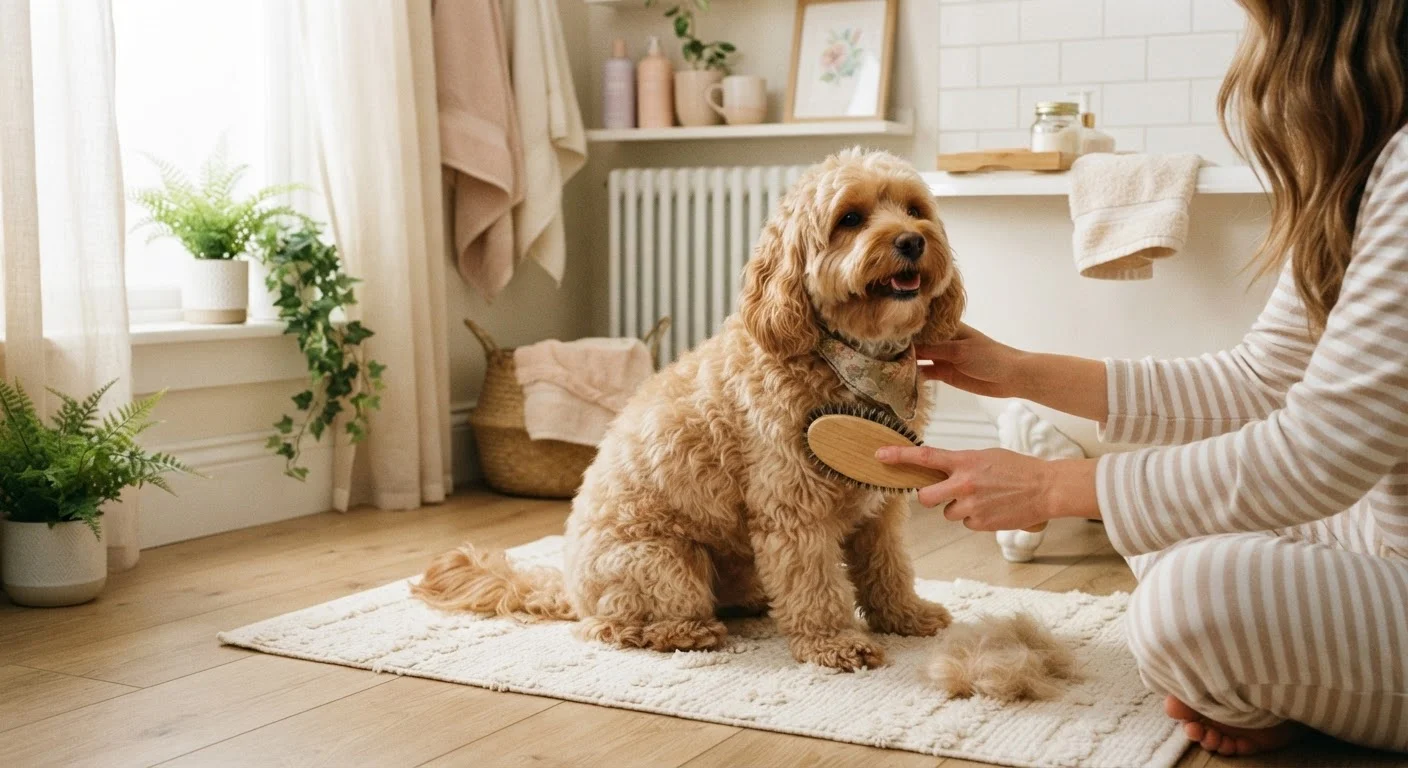
Why At-Home Grooming Is Worth the Effort
Professional grooming appointments add up fast, but the benefits of regular grooming - a clean coat, healthy skin, trimmed nails, and clean ears - are non-negotiable for your pet's wellbeing. The good news? With the right approach, most routine grooming tasks are totally manageable at home, even for first-timers.
Grooming isn't just about appearances. Brushing removes loose fur and distributes natural skin oils, bathing keeps allergens and odor in check, nail trims prevent painful overgrowth, and ear cleaning helps reduce infection risk. Done consistently, these habits can also help you spot early warning signs - unusual lumps, skin irritation, or discharge - before they become bigger problems. For a broader look at keeping costs down without cutting corners, see our guide to budget-conscious pet care.
Slicker brush or rubber grooming mitt
Removes loose fur, detangles, and distributes coat oils during brushing.
Pet-safe shampoo
Cleanses the coat without disrupting your pet's skin pH balance.
Pet nail clippers
Trims nails to a safe length - sized appropriately for your pet's species and nail thickness.
Styptic powder
Stops minor bleeding quickly if you accidentally clip the nail quick.
Cotton balls or gauze pads
Used with ear cleaning solution to gently wipe the outer ear canal.
Vet-recommended ear cleaning solution
Loosens debris and wax in the outer ear for safe, effective cleaning.
Non-slip bath mat
Gives your pet secure footing during bathing, reducing stress and slipping.
Low-heat pet dryer or hair dryer
Safely dries the coat after bathing, especially important for dense or double coats.
Step-by-Step: The Core Grooming Routine
Work through these steps in a calm, quiet space. Keep sessions short at first - especially with young or anxious pets - and reward generously with treats or praise throughout. Consistency is more valuable than perfection.
Brush your pet's coat thoroughly
Before bathing, always brush out tangles and loose fur. Work in the direction of hair growth using a slicker brush for dogs and cats with medium-to-long coats, or a rubber grooming mitt for short-coated pets. Pay extra attention to behind the ears, armpits, and around the collar - common mat zones.
Bathe with a pet-safe shampoo
Use lukewarm water and a shampoo formulated for your specific type of pet - never use human shampoo, as the pH is different and can irritate animal skin. Wet the coat fully, lather from neck to tail avoiding the eyes and ears, then rinse completely. Leftover shampoo residue can cause itching.
Dry your pet safely
Towel-dry first, then use a low-heat pet dryer or your home hair dryer on the coolest setting held at a safe distance. Avoid directing heat at the face or ears. For dogs with dense double coats, ensure the undercoat is fully dry to prevent hot spots or mildew-like odor.
Trim nails carefully
Use a guillotine-style or scissor-style clipper sized for your pet. Clip small amounts at a time - on light-colored nails you can see the pink quick and stop before it; on dark nails, clip in tiny increments and stop when you see a grey or pink oval appear in the cut surface. Have styptic powder on hand in case of accidental bleeding.
Clean ears gently
Apply a vet-recommended ear cleaning solution to a cotton ball or gauze pad - never a cotton swab - and gently wipe the visible inner ear flap and the entrance to the ear canal. Do not push anything into the canal itself. Healthy ears look pale pink and have little to no odor.
Regular grooming pairs well with a broader preventive care routine. Our annual health checklist covers vaccinations, parasite prevention, and dental checks that complement good grooming habits. Speaking of parasites, grooming sessions are also a great opportunity to check for fleas and ticks - learn more in our article on keeping parasites off your pet year-round.
When to Call a Professional Groomer or Vet
At-home grooming has real limits, and recognizing them is part of responsible ownership. A few situations that call for professional help:
- Severe matting: Mats close to the skin can cause pain and injury if you try to cut them yourself. A professional groomer has the tools and training to remove them safely.
- Nail quicking: If you accidentally cut into the quick (the blood vessel inside the nail) and bleeding doesn't stop within a few minutes with gentle pressure, contact your vet.
- Ear infections: Redness, swelling, dark discharge, or a strong odor from the ears aren't grooming issues - they're medical ones. Don't attempt to treat an ear infection at home; see your vet.
- Highly anxious or aggressive reactions: If your pet becomes distressed to the point of biting or injuring themselves, professional groomers trained in low-stress handling - or a veterinary visit - is the safer path.
For a fuller picture of responsible pet care from day one, explore everything that goes into responsible pet ownership. And if you're managing care on a tight budget, keeping a pet healthy when money is tight is a practical resource worth bookmarking.
This article is for general informational purposes only and is not a substitute for veterinary advice. Always consult a qualified veterinarian if you have concerns about your pet's health.