Why Enrichment Matters More Than the Price Tag
Boredom is genuinely bad for pets. Dogs deprived of mental stimulation can develop destructive chewing, excessive barking, and anxiety. Cats without outlets may become withdrawn or start overgrooming. Rabbits, birds, and small mammals all share the same need: their brains and instincts have to be engaged regularly to stay healthy.
Here's the good news - enrichment quality has almost nothing to do with how much you spend. What actually matters is novelty, sensory variety, and the opportunity for animals to problem-solve or express natural behaviors like foraging, hunting, and exploring. A cardboard box can deliver all three. For a broader look at where pet care dollars genuinely count, see our guide to budget pet care essentials.
This how-to walks you through creating simple, safe enrichment projects at home - no specialized tools, no significant cost, and no compromise on your pet's wellbeing.
What you will need
Step-by-Step: Building Your DIY Enrichment Toolkit
Work through the following steps at whatever pace suits you. Even completing one or two will noticeably improve your pet's daily routine. For pets with specific health conditions, check in with your veterinarian before introducing new physical challenges.
Create a Cardboard Foraging Box for Dogs or Cats
Take a medium cardboard box and toss in a mix of crumpled newspaper, smaller boxes, and paper bags. Hide several pieces of kibble or small treats throughout the layers. Let your pet dig, sniff, and root around to find every piece. This targets natural scavenging instincts and provides several minutes of focused mental effort.
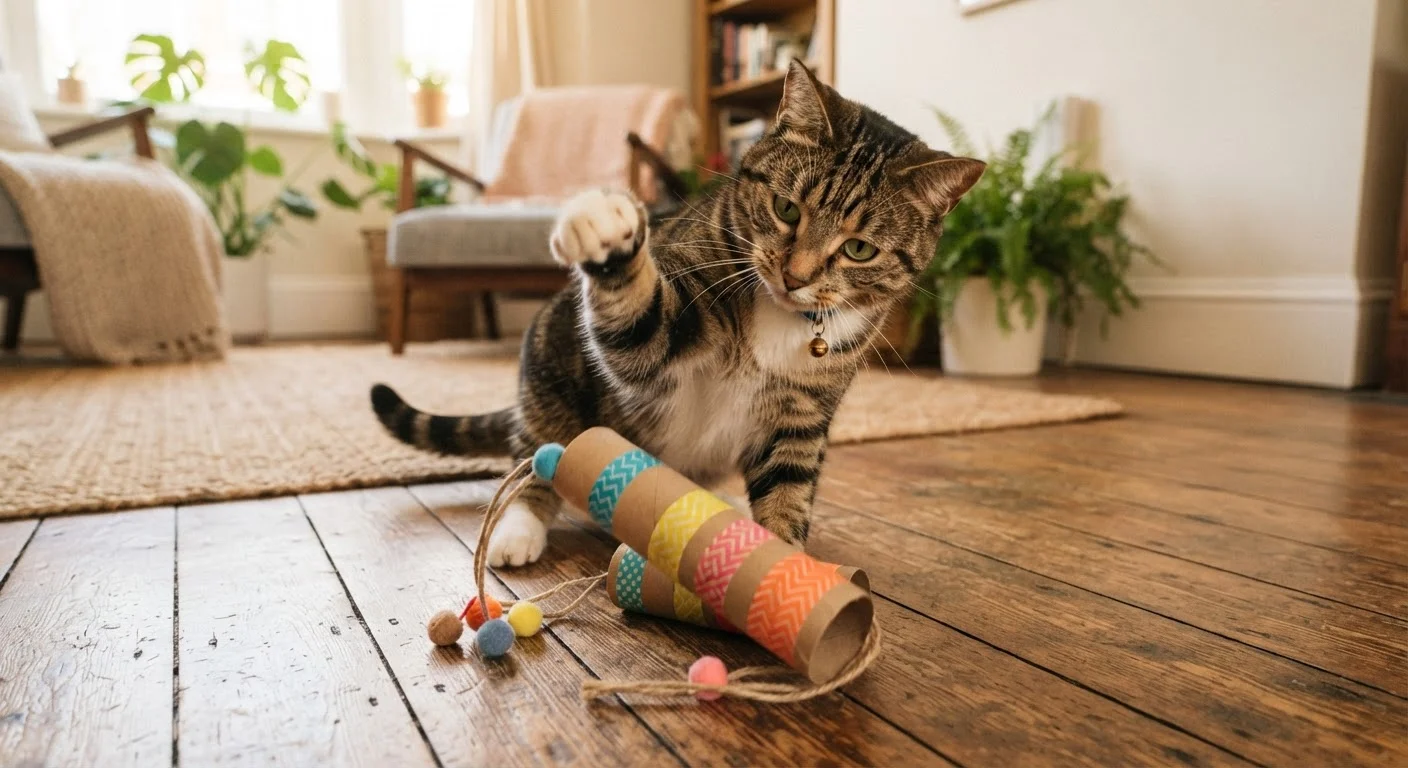
Build a Paper Towel Roll Puzzle Feeder
Fold the ends of an empty paper towel tube shut and drop a few pieces of kibble inside. You can make a set of five or six at once. Your dog, cat, or rabbit will roll, bat, and nudge the tubes until the food falls out. For birds and small mammals, hang a loosely folded tube from the cage bars.
Make a Snuffle Mat from Fleece Scraps
Cut an old rubber sink mat (with drainage holes) or a piece of rubber shelf liner into a base. Cut fleece fabric or old T-shirt material into strips roughly one inch wide and six inches long. Push each strip through a hole in the mat and tie it in a knot on the underside. Cover the entire surface this way, then scatter kibble across the mat and let your dog forage through the fleece fibers.
Set Up a Sensory Exploration Zone for Cats
Open a large cardboard box on its side and place it on the floor. Add crinkly paper balls, a few toilet roll tubes, and a small sock knotted around a pinch of dried catnip. Rearrange the items weekly or swap in a new box. For an extra layer of challenge, cut holes in the top of the box just large enough for a paw to reach through.
Introduce a Rotation Schedule
Divide your DIY enrichment items into two or three groups. Offer one group for a week, then swap it out for the next. Items that have been stored out of sight regain novelty quickly for most animals. Label storage bags or bins with a simple weekly schedule so the rotation becomes automatic.
Once you've built a small collection of enrichment tools, rotate them on a weekly basis. Reintroducing a toy that's been out of sight for a few weeks feels brand new to most animals. This approach pairs well with low-cost training strategies that use play as a reward.
Short Sessions Beat Marathon Play
Most pets benefit more from three to five focused five-minute enrichment sessions spread through the day than from one long bout. Shorter, varied interactions keep novelty high and prevent overstimulation. Build enrichment into existing routines - before meals is a natural trigger that also reinforces calm, engaged behavior.
Making It a Habit Without Burning Out
The biggest risk with DIY enrichment isn't the crafting - it's consistency. Pet owners often start strong then quietly let enrichment slip when life gets busy. A simple solution: batch-build a few items on one afternoon each month, then store them in a bin. You'll always have something fresh to rotate in.
If you notice your pet showing persistent signs of anxiety, destructive behavior, or disinterest in play despite regular enrichment, that's worth a conversation with a vet or certified animal behaviorist. Enrichment supports mental health but isn't a substitute for professional guidance when something deeper is going on. Our pet health basics hub covers the behavioral and physical signs worth monitoring.
Finally, remember that enrichment is one piece of a larger puzzle. Nutrition, preventive care, and social interaction all play interconnected roles. For a complete view, the comprehensive guide to keeping pets healthy on a budget is a strong next read.
This article is for general informational and educational purposes only. It is not a substitute for professional veterinary advice. If your pet shows signs of distress, illness, or persistent behavioral problems, please consult a licensed veterinarian.