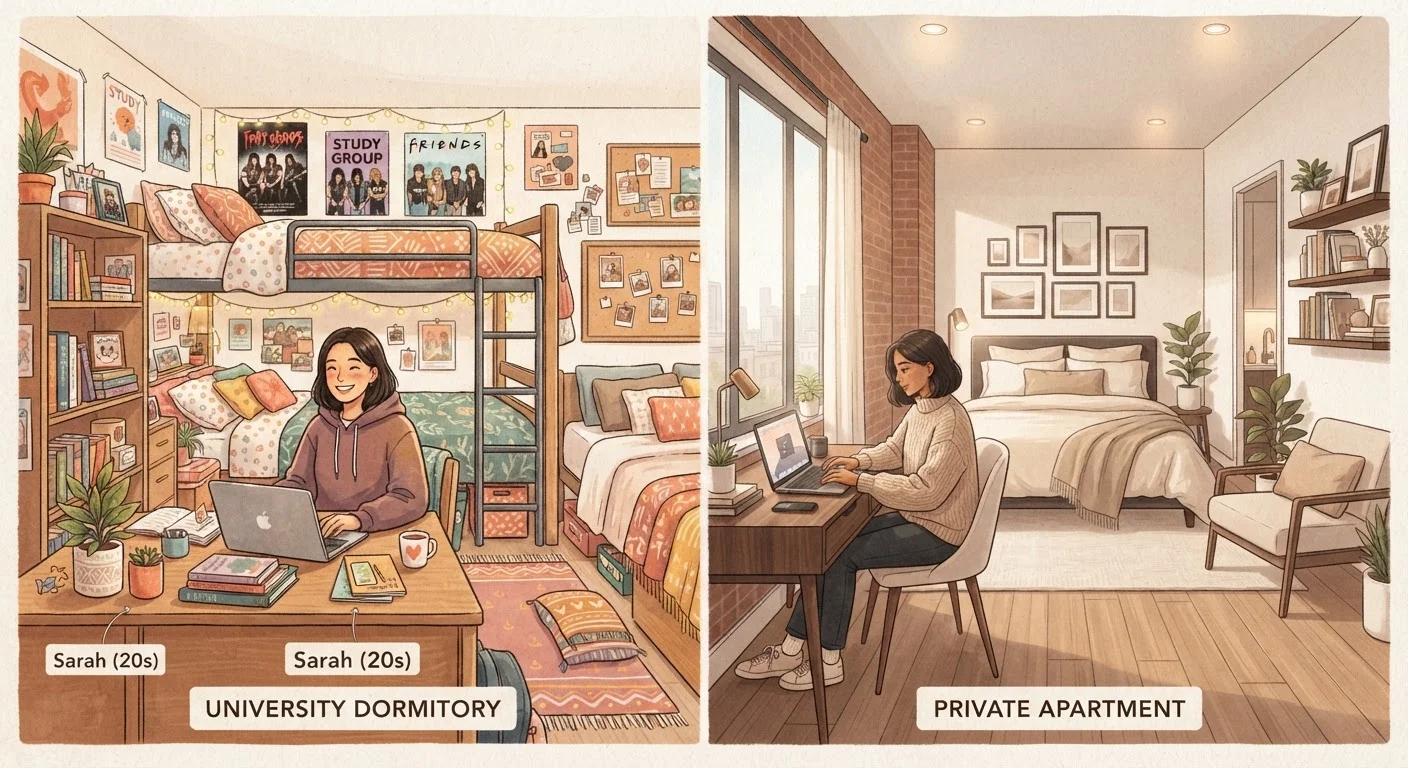
What Each Option Actually Includes
The sticker price of any room rarely tells the full story. Understanding what is - and isn't - bundled into each option is the first step toward an honest cost comparison.
Subsidised university accommodation is managed directly by the institution and often priced below market rate as part of a commitment to student access. Rent typically covers electricity, heating, water, and sometimes broadband. Contracts are usually aligned to the academic year (around 39-42 weeks), which means you are not paying for summer months you spend at home. Shared kitchen facilities, on-site laundry, and 24-hour security are common inclusions.
Private student accommodation - whether purpose-built student blocks or shared houses in the private rental market - is priced at whatever the local market supports. Some purpose-built providers do include bills in quoted rents, but standard private lettings generally do not. You will likely need to set up and split gas, electricity, water, and broadband contracts separately, adding administrative complexity and variable monthly costs. For a fuller picture of overlooked budget pressures, see the hidden costs of university life.
| Criterion | Subsidised University Housing | Private Accommodation |
|---|---|---|
| Typical monthly rent range | $600-$1,200 (bills often included) | $700-$1,800+ (bills often separate) |
| Utilities included | Usually yes | Often no - set up separately |
| Upfront deposit | Small fee or none | 1-2 months' rent typical |
| Contract length | Academic year (~39-42 weeks) | Usually 12 months |
| Location flexibility | Limited - on or near campus | High - any neighbourhood |
| On-site support | Resident advisors, welfare staff | Minimal or none |
| Housemate choice | Assigned or limited | Choose your own |
Breaking Down the Real Cost Difference
Direct cost comparisons vary widely by city and institution, but some patterns hold broadly across the US higher education landscape.
University-managed rooms in on-campus residence halls typically range from around $600 to $1,200 per month, depending on room type, meal plan options, and institution location. Private off-campus rentals in the same cities can range from $700 to over $1,800 per month for a comparable private room, with utilities adding another $80-$150 on average.
~$10,000
Average annual on-campus room and board cost
According to the College Board's Trends in College Pricing reports, average on-campus room and board at four-year public institutions has historically hovered around this figure, though costs vary significantly by institution.
$80-$150
Estimated monthly utility add-on in private rentals
Utility costs for a shared private student household vary by region, season, and usage - this range is illustrative and should be verified locally.
12 months
Typical private rental contract length
Most standard private rental agreements in the US run for a 12-month term, meaning students may pay rent during summer breaks when not in residence.
One commonly overlooked factor is the deposit requirement. Private landlords typically require one to two months' rent upfront as a security deposit, which must come out of pocket before you have even moved in. University housing usually requires a much smaller reservation fee or no deposit at all. Similarly, private lettings sometimes involve letting agency fees, though regulations on what landlords and agents can charge vary by state.
If you are trying to build a fuller picture of your student finances, it also helps to understand how tuition fee structures work alongside accommodation costs.
Non-Financial Trade-Offs Worth Considering
Cost is central, but it is not the only variable. A few practical differences can influence whether a cheaper option is actually the right one for you.
- Contract flexibility: University contracts are often all-or-nothing - you commit to a fixed term. Private rentals typically run 12 months, which can mean paying rent over summer even if you have gone home.
- Community and support: On-campus housing usually includes resident advisors, welfare support, and social programming - valuable for students new to independent living.
- Location: University halls are generally close to campus. Private rentals give you the freedom to choose a neighbourhood, but longer commutes may add transport costs.
- Independence: Private accommodation comes with full responsibility for bills, repairs (via your landlord), and household management - a useful skill-building experience, but one that carries real financial risk if not managed carefully.
Students navigating these decisions as part of a broader budget strategy may find useful framing in budgeting basics. And for a broader look at the spending patterns that quietly erode student finances, money habits that cost students more than they realise is worth reading alongside this guide.
This article is for general informational and educational purposes only. Costs cited are illustrative ranges and will vary significantly by institution, city, and individual circumstances. Always verify current pricing directly with your university housing office or prospective landlord before making any financial commitment.