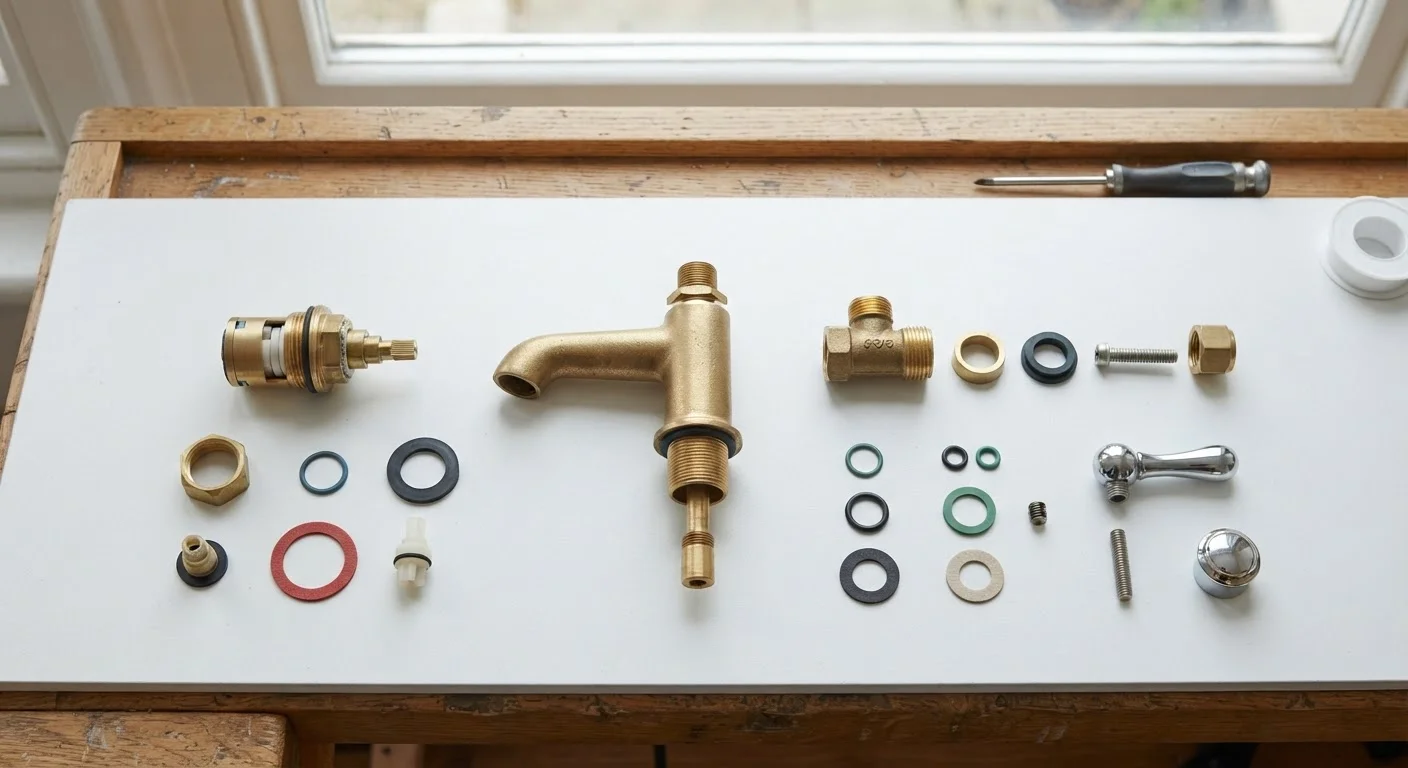
Why Valve Type Matters Before You Start
A leaky tap is one of the most common household problems, but reaching for a wrench before you know what's inside can turn a five-minute fix into a frustrating parts run. Most taps in US homes use one of four valve mechanisms - compression, ball, cartridge, or ceramic disc - and each fails differently, requires different replacement parts, and calls for a different repair approach.
This guide is a plain-language reference to help you identify what you're dealing with, describe the problem accurately at a hardware store, and understand what the repair involves. If you've never tackled a home repair before, A First-Timer's Roadmap to Home Repairs covers the tools, safety basics, and when to call a licensed plumber instead of going DIY.
| Most common valve type in older US homes | Compression valve |
| Typical cause of dripping from spout tip | Worn washer or cartridge |
| Typical cause of leak at handle or base | Degraded O-ring or packing |
| Most durable valve mechanism | Ceramic disc |
| Cartridge replacement: brand-specific? | Yes - note model markings before buying |
| First step before any tap disassembly | Close the shutoff valve under the sink |
The Four Main Tap Valve Types
Compression Valves
The oldest and most common mechanism in older US homes. Turning the handle presses a rubber washer down onto a metal seat to stop water flow. Leaks typically mean the washer or O-ring has worn out - both are inexpensive and widely available. The seat itself can also corrode and may need resurfacing or replacement.
Ball Valves
Common in single-handle kitchen faucets, a ball valve uses a rotating ball with a hole through it to control flow and temperature. Leaks often come from worn springs, seats, or O-rings inside the housing. Repair kits are sold by cartridge size; you'll need to identify the faucet model or measure the ball diameter to buy the right one.
Cartridge Valves
Found in both single- and double-handle faucets, a cartridge is a self-contained plastic or brass unit that slides in and out. When it fails, the usual fix is full cartridge replacement rather than rebuilding individual parts. Cartridges are brand- and model-specific, so note any markings on the old cartridge before going to the store.
Ceramic Disc Valves
The most durable design, using two ceramic discs that rotate against each other to control flow. They rarely fail outright but can leak if debris scratches the disc surface or if the cylinder O-rings degrade. Ceramic discs can sometimes be cleaned and reseated; cylinders are replaced as a unit when cleaning doesn't resolve the issue.
Compression valve
A valve that stops water by pressing a rubber washer against a metal seat. Found in many older two-handle faucets; the washer wears out over time and is the most common source of dripping.
Ceramic disc
A hard, flat disc made of dense ceramic material used in pairs to control water flow. Ceramic discs are highly durable and resist wear, but can be scratched by debris in the water supply.
O-ring
A small rubber loop seated in a groove around a valve stem or cartridge. O-rings prevent leaks at joints and handles; they degrade over time due to heat, pressure, and mineral buildup.
Valve seat
The metal surface inside a compression faucet body against which the washer presses to create a watertight seal. A pitted or corroded seat will cause repeated washer failure.
Cartridge
A self-contained valve unit - usually plastic or brass - that slides into a faucet body. When a cartridge fails, the entire unit is typically replaced rather than rebuilt.
Packing nut
A threaded nut that compresses packing material around the valve stem to prevent leaking at the handle. Tightening a loose packing nut is often an easy first fix for handle-area drips.
Aerator
A small mesh screen screwed onto the faucet spout that mixes air into the water stream to reduce splashing. Not a valve component, but a clogged aerator can mimic low-pressure problems.
Stem
The shaft that connects the handle to the washer or packing in a compression faucet. The stem rises and falls - or rotates - as you turn the handle to open and close the valve.
Common Parts You'll Encounter
Whether you're buying replacements or simply describing the problem to a plumber, knowing these component names prevents confusion.
- Washer: A rubber disc that seals against the valve seat in compression faucets. The most common cause of dripping in older taps.
- O-ring: A rubber loop that seals around stems and cartridges. Worn O-rings cause leaks around the spout base or handle, not just from the spout tip.
- Valve seat: The metal surface the washer presses against. A rough or pitted seat will chew through washers quickly; a seat wrench can resurface minor damage.
- Packing: A fibrous or rubber material wrapped around the valve stem to prevent handle-area leaks. Packing nut tightening is often a quick fix before full replacement is needed.
- Cartridge: A removable module housing the valve mechanism. Cartridge replacement is usually a complete swap, not a rebuild.
- Aerator: The mesh screen at the spout tip. Not a valve part, but a clogged aerator is often mistaken for a flow or pressure problem and is simple to unscrew and clean.
When to Check for a Permit
In most US jurisdictions, replacing a washer, O-ring, or cartridge is considered minor maintenance and doesn't require a permit. However, replacing a faucet entirely, moving supply lines, or working on drain connections may require one. Requirements vary significantly by city and county, so check with your local building department before starting any work that goes beyond the valve itself.
Shutting Off Water and Knowing Your Limits
Before opening any tap for repair, locate and close the shutoff valve under the sink or, if there isn't one, the main house shutoff. Turn on the tap after shutting the water off to release residual pressure before disassembling anything.
Many compression and cartridge repairs are straightforward tasks most homeowners can manage with basic tools. However, if you see corrosion on supply lines, if the valve seat is severely damaged, or if any supply pipe connections are involved, consult a licensed plumber. Work involving main water lines, soldering copper pipe, or lead-based older plumbing should always be done by a qualified professional. Check whether your local jurisdiction requires a permit for plumbing work beyond simple washer or cartridge replacement - requirements vary by municipality.
This article provides general home maintenance information for educational purposes only. It is not a substitute for advice from a licensed plumber. Always verify local codes and consult a qualified professional for any work beyond your skill level or comfort.