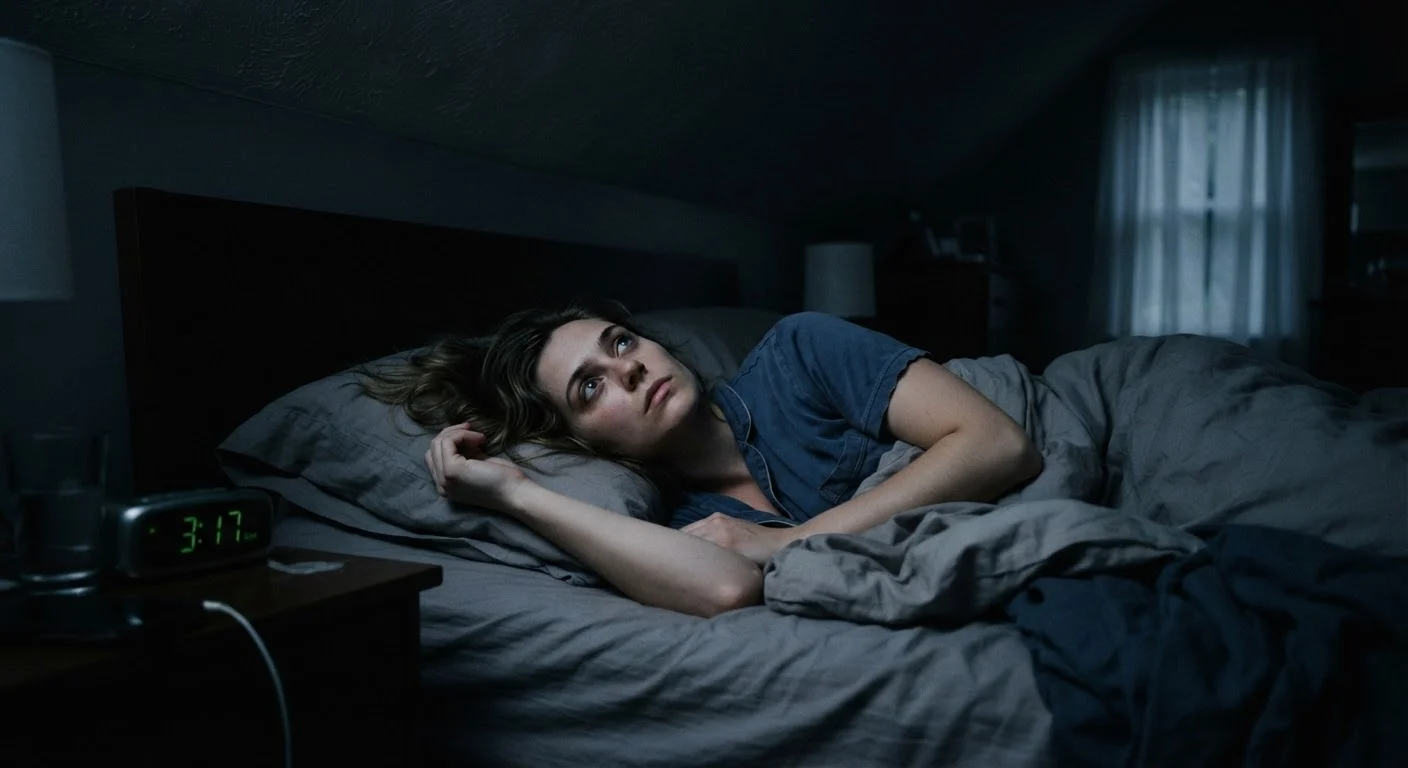
What Happens in Your Brain When You Miss Sleep
Sleep is not passive downtime - it is when the brain actively performs critical maintenance. During sleep, the brain cycles through stages including slow-wave (deep) sleep and rapid eye movement (REM) sleep, each serving distinct functions. Slow-wave sleep supports physical restoration and memory consolidation; REM sleep is closely tied to emotional processing and creative thinking.
When sleep is cut short, these cycles are compressed or interrupted. The prefrontal cortex - the region responsible for reasoning, impulse control, and emotional regulation - becomes less effective at moderating signals from the amygdala, the brain's threat-detection centre. The result is a nervous system that's primed to react rather than respond.
This is general educational information about how sleep affects brain function, not a diagnosis or treatment recommendation. If you are experiencing persistent sleep difficulties, speaking with a healthcare provider is the appropriate next step.
Mood, Irritability, and Emotional Reactivity
One of the most immediate and noticeable effects of poor sleep is a shift in emotional tone. Studies published in journals such as Sleep and Journal of Sleep Research consistently show that sleep-deprived individuals rate neutral images as more negative and feel greater distress in response to minor frustrations.
This isn't simply a matter of willpower or attitude. The amygdala becomes up to 60% more reactive after sleep loss in some neuroimaging studies, while the connection between the amygdala and prefrontal cortex weakens. Practically, this means small annoyances can feel disproportionately overwhelming - a key reason sleep-deprived people often report feeling "on edge" without a clear cause.
Recognise Sleep-Driven Irritability Early
If you notice you're more reactive or negative than usual, check whether your sleep has been shorter or less restful in recent days before assuming the cause is external. Naming the likely source of the irritability - sleep loss rather than a personality flaw - can reduce self-criticism and help you focus on the fix. Prioritising even one earlier bedtime can begin to shift your emotional baseline.
Chronic emotional reactivity driven by poor sleep can strain relationships and reduce your sense of wellbeing. Recognising this mechanism is the first step toward addressing it, rather than assuming the irritability is a character flaw or simply "stress."
Memory Consolidation and Cognitive Fog
Sleep plays a non-negotiable role in how memories are formed and stored. During slow-wave sleep, the hippocampus replays recent experiences and transfers information to the cortex for longer-term storage - a process called memory consolidation. REM sleep then helps integrate new information with existing knowledge, supporting understanding and problem-solving.
When this process is disrupted, the effects are measurable. People who sleep after learning perform significantly better on recall tasks than those who stay awake, according to research by sleep scientists including those at Harvard Medical School's Division of Sleep Medicine. Conversely, sleep-deprived students and workers often notice difficulty concentrating, slower processing speed, and increased errors - commonly described as "brain fog."
See our guide to research-backed wellness habits for a broader look at free daily habits that support cognitive and overall health.
7-9 hrs
Recommended nightly sleep for adults
Per the American Academy of Sleep Medicine and Sleep Research Society consensus guidelines for adult health.
1 in 3
US adults not getting enough sleep
According to the Centers for Disease Control and Prevention (CDC), about one-third of American adults regularly sleep less than the recommended amount.
~60%
Increase in amygdala reactivity after sleep loss
Neuroimaging research, including studies cited by Harvard Medical School's Division of Sleep Medicine, suggests significantly heightened emotional reactivity after insufficient sleep.
Stress Tolerance and the Cortisol Connection
Sleep and the body's stress response are tightly linked through cortisol, the hormone released in response to perceived threats. Under normal conditions, cortisol follows a daily rhythm - peaking in the morning to promote alertness and declining toward bedtime. Sleep deprivation disrupts this rhythm, leading to elevated evening cortisol levels that make it harder to wind down and fall asleep the next night.
This creates a reinforcing cycle: poor sleep raises cortisol, elevated cortisol impairs sleep, and reduced sleep further weakens your capacity to regulate stress responses. Over weeks and months, this pattern is associated with increased risk of anxiety, burnout, and difficulty recovering from ordinary daily challenges.
Breaking the cycle doesn't require expensive interventions. A consistent wind-down routine - such as dimming lights, reducing screen time, and practicing slow breathing in the hour before bed - is a free, evidence-informed strategy for signalling to your nervous system that it's safe to rest.
Recovery Sleep: What It Can and Cannot Do
The good news is that sleep recovery is real - the brain and body do bounce back from short-term sleep loss with adequate rest. Mood and alertness often improve noticeably after a full recovery night. However, research suggests that some cognitive deficits, particularly in sustained attention and working memory, may persist for longer than people expect after extended periods of poor sleep.
Importantly, people are often poor judges of their own sleep-related impairment. You may feel subjectively better after one good night while still performing below your well-rested baseline on objective tasks. This is why building consistent sleep habits - rather than relying on occasional recovery nights - is the most reliable approach.
For a comprehensive look at budget-friendly strategies across all dimensions of wellbeing, including sleep, see our affordable self-care guide.
This article is for general informational and educational purposes only and is not a substitute for professional medical advice, diagnosis, or treatment. If you are experiencing persistent sleep problems or symptoms affecting your daily functioning, please consult a qualified healthcare professional.