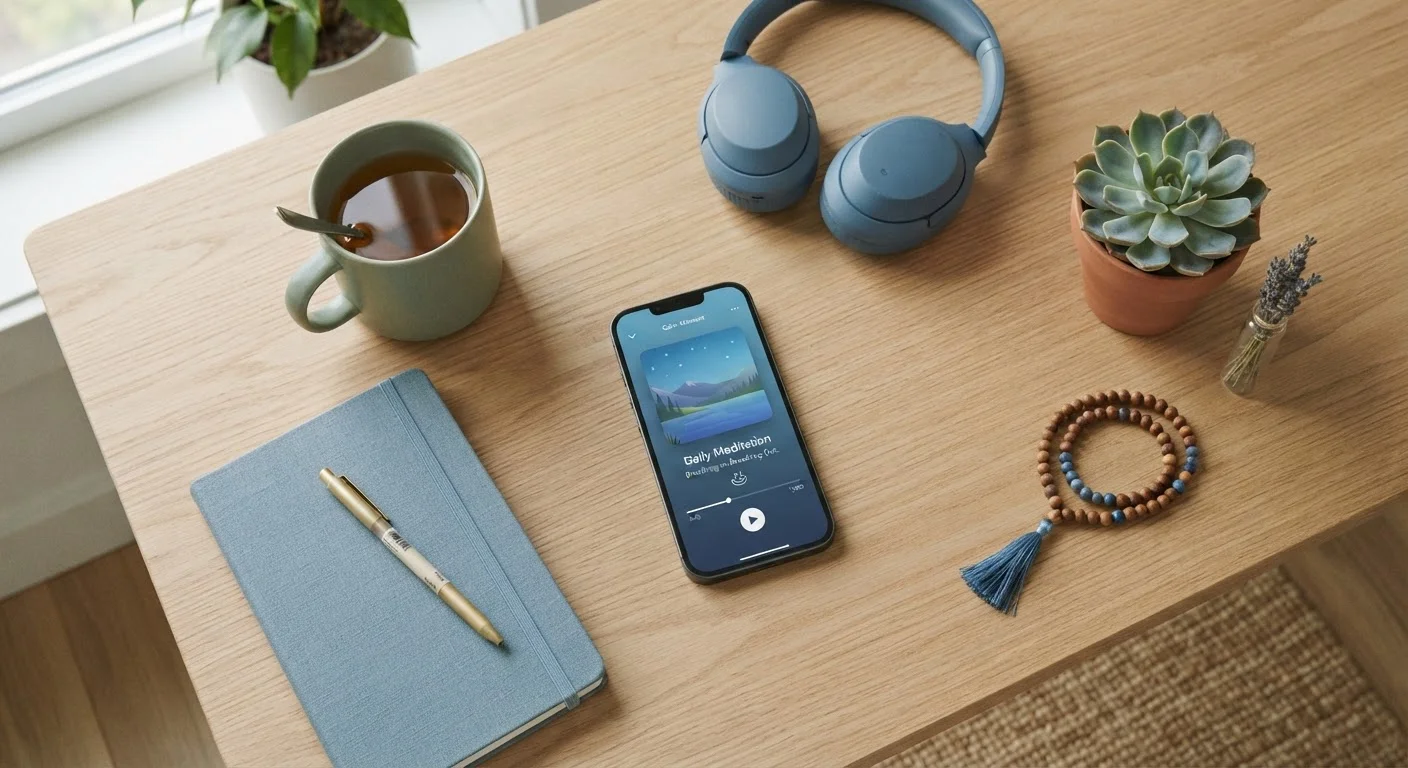
What the Research Actually Shows About Meditation Apps
A growing body of peer-reviewed research has examined whether digital meditation tools produce real mental health benefits. A 2018 review published in Mindfulness found that app-based mindfulness interventions were associated with modest but meaningful reductions in stress, anxiety, and depressive symptoms among general adult populations. Importantly, the researchers noted that the structure and regularity of practice - not the price tag of the delivery tool - appeared to be the key driver of results.
If you are new to meditation, it helps to first understand the distinction between mindfulness and focused meditation. See our overview of how mindfulness and meditation differ before choosing an approach.
A 2019 study in the journal JMIR Mental Health compared structured app-based programs with unguided practice and found that guided sessions improved user adherence - meaning people stuck with it longer. This is where paid apps, which invest heavily in content design and habit nudges, can have a practical edge over a plain timer or informal practice.
What Paid Apps Offer Beyond the Price
Subscription meditation platforms generally provide a curated library of guided sessions, sleep meditations, breathing exercises, and progress tracking. Their interfaces are designed to reduce friction - making it easier to practice at a consistent time each day - which aligns with what behavioral science says about habit formation.
Premium platforms also tend to offer programs organized around specific goals (stress reduction, focus, sleep quality), which can be useful for people who want structure without having to design their own curriculum. Some include offline access, customizable session lengths, and integration with health-tracking platforms.
| Paid Apps | Free Alternatives | |
|---|---|---|
| Cost | ~$50-$100+/year | Free or library-subsidized |
| Content variety | Extensive, curated library | Variable; depends on source |
| Guided structure | Goal-based programs included | MBSR programs available free |
| Ease of use | Polished, low-friction UX | Requires more self-direction |
| Sleep & niche programs | Typically included | Limited or scattered |
| Evidence of effectiveness | Supported by some studies | Core practice equally supported |
| Offline access | Usually available | Varies by platform |
The trade-off is cost. Annual subscriptions can range from roughly $50 to over $100 per year, which may be a genuine barrier for young adults managing tight budgets. It is worth asking whether the added features will actually translate into more consistent practice for you specifically.
The Honest Case for Free Alternatives
Free resources for meditation practice are more substantial than many people realize. Public libraries in many US cities provide free access to audio programs and even premium app subscriptions through platforms like Libby or Kanopy. University health centers and community wellness programs regularly offer free guided sessions, sometimes online.
YouTube channels run by credentialed mindfulness teachers offer full-length guided meditations, body scans, and breathing exercises at no cost. Podcast-based programs built on the Mindfulness-Based Stress Reduction (MBSR) framework - a clinically studied protocol - are widely available for free. Several open-source or permanently free apps also provide timed sessions, interval bells, and basic guidance without a subscription.
For a grounded look at what free digital wellness tools can realistically provide, see what to realistically expect from free mental wellness apps. The same principles that apply to learning through free resources apply here: free does not mean low quality, but it may require more self-direction.
Try Before You Commit to a Subscription
Most paid meditation platforms offer a free trial period ranging from one to two weeks. Use this window to assess whether the content and interface genuinely improve your likelihood of daily practice. If you find yourself equally consistent using a free tool during that period, the subscription may not add meaningful value for your situation.
Those interested in complementary no-cost habits can also explore daily mental wellness habits that cost nothing for a broader framework.
How to Choose Based on Your Situation
Neither option is universally superior. The right tool is the one you will actually use. A few practical questions can help guide the decision:
- Are you a complete beginner? A structured paid program may reduce the learning curve - but free MBSR-based audio programs can serve the same function.
- Do you have a consistent routine already? If you already meditate regularly, free tools are likely sufficient to maintain and deepen your practice.
- Is budget a real constraint? If so, start with free resources. Effectiveness research does not suggest that paying more produces proportionally better outcomes.
- Do you want sleep content or very specific programs? Paid platforms tend to offer more depth and variety in niche areas like sleep or performance focus.
It is also worth considering how your phone use relates to your wellness goals more broadly. Our article on mindful phone use vs. digital detox explores how to set intentional boundaries around screen-based tools, including meditation apps.
This article is for general informational and educational purposes only and is not a substitute for professional mental health advice, diagnosis, or treatment. If you are experiencing significant stress, anxiety, or other mental health concerns, please consult a qualified healthcare professional.